Potato Flakes in Human Food: The Complete Application Matrix
Dehydrated potato flakes are one of the most versatile ingredients in the human-food manufacturing toolkit, yet most buyers know them for a single application — instant mashed potato. In practice, a single specification of Hongji Potato Flakes (HJ-PF-01) functions across four distinct food categories: bakery, snacks & extrusion, soups & sauces, and prepared meals. Each category draws on a different functional property of the same pre-gelatinized potato starch.
This guide is the application matrix — and it goes one step further than a list of inclusion rates. For each category we quantify the trade-off that actually drives a purchase decision: how much extra yield a baker gains, how much expansion a snack formulator sacrifices, how many thickening units a soup maker buys per kilogram. The numbers below are derived from Hongji’s published application data, not restated from a datasheet.
In Plain Terms
Think of potato flakes as pre-cooked, dried potato that turns back into a thick, smooth paste the moment it meets warm water — no stove required. In a food factory that matters because it lets the ingredient do four jobs at once: soak up water (like a sponge), hold fat and water together (like an emulsifier), thicken a liquid (like a starch), and taste like potato. A bakery leans on the sponge; a snack plant leans on the starch; a soup maker leans on the thickener. Same ingredient, four different hats.
Key Takeaways
- Four applications, one ingredient — the same pre-gelatinized starch serves bakery (water binding + emulsification), snacks (expansion control), soups/sauces (viscosity + freeze-thaw stability), and instant mash (rehydration).
- The water trade-off is bounded, not unlimited — flakes absorb 5.5–7.5× their weight in water, but a baker only adds 0.8–1.2% water per 1% flakes. The gap is the difference between theory and a workable dough.
- Expansion falls ~0.032 per percentage point of potato — a near-linear relationship (R² = 0.93) that lets a formulator predict texture before running a trial.
- Flakes vs powder is a real choice — flakes thicken hotter (2,000–3,500 cP peak); 60-mesh powder hydrates colder and survives more freeze-thaw cycles (≥5 vs ≥3).
- One specification, four markets — a single HJ-PF-01 lot can serve all four categories, which is why volume buyers standardize on it.
The Functional Foundation
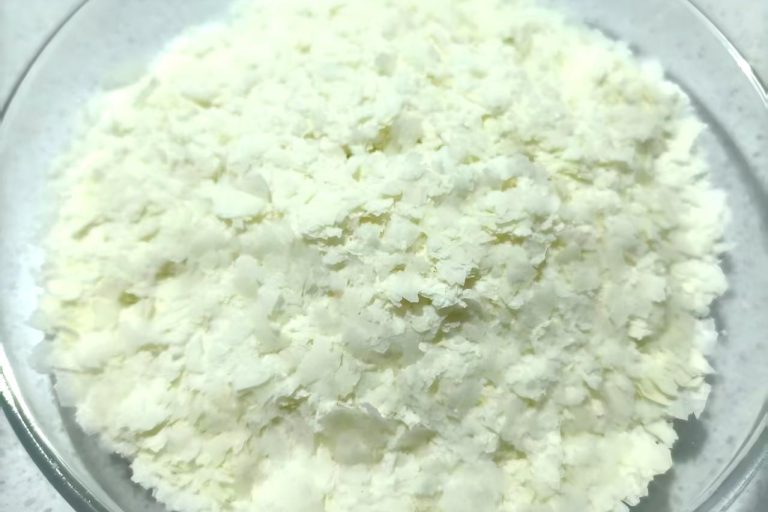
Potato flakes behave differently from raw wheat flour or native starch because they are already pre-gelatinized during manufacture. The drum-drying step cooks the starch granules, so when a manufacturer rehydrates them, the starch absorbs water and thickens without a separate cooking stage.
| Property | Value | What it means for a formulator |
|---|---|---|
| Water absorption | 5.5–7.5× its own weight | Higher dough yield, softer crumb, more moisture per kg of dry solids |
| Gelatinization range | 62–68°C | Swells lower than wheat starch (52–58°C), delaying set and extending oven spring |
| Native protein | 7–10% (Kjeldahl N×6.25) | Natural emulsification — reduces added emulsifier |
| Reducing sugars | ≤1.5% | Controlled Maillard browning for crust and snack color |
| Bulk density (loose) | 0.35–0.55 g/mL | Predictable dosing in dry-mix and continuous lines |
| Rehydration ratio | ≥7.0 | Reliable water-to-flake reconstitution in instant mash |
The practical summary: the flakes do four jobs — bind water, emulsify fat, thicken liquids, and deliver authentic potato flavor — and each category leans on a different one.
The Four-Application Matrix
| Application | Primary function | Recommended product | Typical inclusion | Key processing note |
|---|---|---|---|---|
| Bakery | Water binding, emulsification, soft crumb | Potato Flakes (HJ-PF-01) | 3–15% of flour weight | Add 0.8–1.2% water per 1% flakes; reduce fat 5–10% |
| Snacks & extrusion | Expansion control, starch matrix, flavor base | Powder (60 mesh) or fine flakes | 15–50% of dry mix | Higher inclusion → higher density, lower expansion |
| Soups, sauces & meals | Thickening, freeze-thaw stability, mouthfeel | Powder for dry mixes; flakes for retort | 4.5–8% (wet) / 25–30% (dry mix) | Flakes survive retort; powder disperses without clumping |
| Instant mashed potato | Rehydration into mashed texture | Potato Flakes (HJ-PF-01/02) | 100% of the potato base | 1:3.0–5.0 flakes-to-water at 75–90°C |
Application 1 — Bakery
Potato flakes have been used in commercial bread since the mid-20th century, and the reason is economic as much as technical: pre-gelatinized starch absorbs 5.5–7.5× its weight in water, so a baker replaces a small percentage of flour and gains measurable crumb softness and longer shelf life — while the extra water increases yield per kilogram of dry solids.
| Bakery product | Recommended addition (% flour basis) | Optimal | Maximum |
|---|---|---|---|
| White pan bread | 3–8% | 5% | 15% |
| Whole wheat / multigrain | 5–12% | 8% | 20% |
| Hamburger / hot dog buns | 3–6% | 5% | 12% |
| Layer cakes | 5–15% | 10% | 25% |
| Muffins | 8–15% | 12% | 25% |
| Pancakes / waffles | 10–20% | 15% | 30% |
Three formulation adjustments are non-negotiable: water up (0.8–1.2% per 1% flakes), fat and sugar down (5–10% and 5–15%), and emulsifier down (DATEM 0.3–0.5% → 0.2–0.4%; lecithin unnecessary below 8%). Fermentation shortens 10–15%, and the oven runs 5–10°C cooler for 5–10% longer.
Yield Economics: What the Numbers Actually Say
Here is where the datasheet stops and the arithmetic begins. A baker replaces 5% of flour with flakes. The flakes could absorb 28–38 kg of extra water per 100 kg batch (5 kg × 5.5–7.5×). But the formulation rule only adds 4–6 kg. That gap is not an error — it is the difference between the ingredient’s water-holding capacity and a workable dough:
| Substitution | Added water (formulation rule) | Dough mass | Yield gain |
|---|---|---|---|
| 0% (control) | 0 | 159 kg | — |
| 3% | +2.4–3.6 kg | 161–163 kg | +1.5% to +2.3% |
| 5% | +4.0–6.0 kg | 163–165 kg | +2.5% to +3.8% |
| 8% | +6.4–9.6 kg | 165–169 kg | +4.0% to +6.0% |
(Base: 100 kg flour at 59% hydration. Water adjusted per the 0.8–1.2%/1% rule.)
The insight a formulator should carry away: the yield gain from potato flakes is real but modest — 2.5–4% at typical inclusion — because the recipe’s hydration target, not the flake’s absorption limit, sets the ceiling. Pushing water to the theoretical maximum collapses the dough’s structure and extends bake time beyond what the added yield is worth. The economic value of flakes in bakery is primarily crumb softness and shelf life, with yield as a secondary benefit.
Application 2 — Snacks & Extrusion
In snack manufacturing, potato ingredients are structural. In direct-expanded extrusion, the pre-gelatinized starch forms the matrix that traps steam during expansion, so the inclusion rate directly sets texture — from a light puff to a dense, crunchy pellet.
| Snack platform | Recommended product | Inclusion rate |
|---|---|---|
| Direct-expanded collets / puffs | Potato Powder (60 mesh) | 15–40% |
| Baked snack pellets (3G/4G) | Potato Powder (60 mesh) | 20–50% |
| Fabricated potato chips | Potato Flakes (fine milled) | 20–45% |
| Coated / seasoned snacks | Potato Powder (as carrier) | 5–25% |
The Expansion Trade-off, Quantified
The four published data points (0%, 20%, 35%, 50% powder) fit a straight line well enough that a formulator can predict texture before running a trial:
| Metric | Slope per +1% potato | R² | Practical read |
|---|---|---|---|
| Expansion ratio | −0.032 | 0.93 | Every 10% potato costs 0.32 of expansion |
| Bulk density | +1.07 g/L | 0.91 | Every 10% potato adds 10.7 g/L |
| Piece hardness | +0.11 N | 0.96 | Every 10% potato adds 1.09 N |
The linearity (R² 0.91–0.96) is the useful finding: potato’s expansion-suppressing effect is essentially constant per percentage point, so there is no cliff to discover — a formulator moving from 20% to 30% powder knows in advance to expect density to rise from ~65 to ~80 g/L and hardness from ~9.8 to ~11.5 N. The trade-off is a dial, not a switch. Keep inclusion ≤25% for maximum puff; push to 35–50% when the target is a dense, crunchy pellet.
Twin-screw extrusion is preferred (required for flakes), with a barrel profile from 80–100°C in zone 1 up to 150–170°C at the die and feed moisture of 14–18% (powder) or 16–22% (flakes). Fabricated chips follow a different route — sheeting, cutting, frying — where fine-milled flakes at 30–45% give a chip with 28–38% final oil and ~3.5 N breaking force.
Application 3 — Soups, Sauces & Prepared Meals
In liquid systems, the flakes-vs-powder choice is the first decision:
| Property | Potato Flakes | Potato Powder (60 mesh) |
|---|---|---|
| Cold-water hydration | Partial (15–25%) | Good (20–40%) |
| Hot-water viscosity (peak) | 2,000–3,500 cP | 1,500–2,800 cP |
| Freeze-thaw stability | Good (≥3 cycles) | Very good (≥5 cycles) |
| Acid stability (pH <4.0) | Moderate | Good |
| Clumping tendency | Low–moderate | Low (free-flowing) |
Thickening Equivalence, in Numbers
Boiled down to midpoints, the two products are different tools for different jobs:
| Metric | Flakes | Powder | Meaning |
|---|---|---|---|
| Peak viscosity (midpoint) | ~2,750 cP | ~2,150 cP | Flakes are the stronger hot thickener |
| Peak ceiling | 3,500 cP | 2,800 cP | Flakes reach ~25% higher viscosity |
| Cold-water hydration (midpoint) | ~20% | ~30% | Powder hydrates ~50% faster cold |
The decision rule follows directly: hot, heat-stable systems (retort soup, hot-fill sauce) take flakes; cold or freeze-thaw systems (dry mix, frozen sauce) take powder. A cream-of-potato soup at 4.5% flakes, retorted at 121°C for 25–35 min (F₀ ≥ 6), lands at 2,000–4,000 cP — the same mouthfeel a modified-starch system achieves, with a shorter declaration.
Application 4 — Instant Mashed Potato
Instant mash is the one application where the flake is the product. The formulation question is the reconstitution ratio, which spans a 2.4× range depending on the final texture:
| Application | Flakes : water | Water temp |
|---|---|---|
| Foodservice bulk mash | 1 : 4.5–5.0 | 80–85°C |
| Retail / home (standard) | 1 : 3.8–4.2 | 75–85°C |
| Potato croquettes / balls | 1 : 2.8–3.2 | 85–90°C |
| Gnocchi dough | 1 : 2.5–3.0 | 85–90°C |
The quality spec that matters most is color and reducing sugars — L* ≥ 88 (≥ 90 premium) and reducing sugars ≤1.5% (≤1.0% premium) — because these set the whiteness of the finished mash. Full detail is in Instant Mashed Potato for Food Service & CPG.
Choosing Flakes vs Powder
| If you need… | Choose |
|---|---|
| Texture, rustic potato pieces, heat-stable thickening | Potato Flakes (HJ-PF-01 / HJ-PF-02) |
| Fast cold-water hydration, fine dispersion, smooth texture | Potato Powder 60 mesh (HJ-PP-60-01) |
| A blend of both (dry soup, prepared meals) | Fine-milled flakes + powder, ratio per formula |
Both share the same base specification — moisture ≤6.0%, starch 75–82%, protein 7–10%, Salmonella negative/25g — and both are available in standard and premium grades with full traceability to a single growing season.
Working with Hongji
Because Hongji Agriculture is vertically integrated — seed breeding, cultivation, storage, processing, and export under one management — a single HJ-PF-01 or HJ-PP-60-01 specification carries the same quality profile season to season, which is what a multi-SKU manufacturer needs to lock a formulation. For custom particle size, reduced reducing sugars, or a proprietary blend, see customized ingredient development.
Frequently Asked Questions
Can one potato flake specification serve all four applications? Yes, within limits. HJ-PF-01 works in bakery, soups, and instant mash directly; for fine dispersion in dry snack and soup mixes you will want the 60-mesh powder or fine-milled flakes. Most multi-category buyers standardize on HJ-PF-01 plus HJ-PP-60-01 — two SKUs covering the whole matrix.
What is the biggest hidden cost when switching to potato flakes? Water. Pre-gelatinized starch absorbs 5.5–7.5× its weight, so the dough or mix needs more water — and in bakery, more baking time to remove it. The water is cheap; the extra oven time and the reformulation labor are the real cost.
How much extra yield does a baker actually get? Roughly 2.5–4% at 5% substitution. The flake can hold far more water than the recipe adds, but the dough’s hydration target — not the flake’s absorption limit — sets the ceiling.
How predictable is the snack expansion trade-off? Very. Expansion falls ~0.032 per percentage point of potato (R² = 0.93), and density and hardness rise on equally linear slopes, so a formulator can predict the texture of any inclusion level before running a trial.
Are potato flakes a clean-label ingredient? Yes. The declaration is “dried potato,” a recognizable single ingredient with no E-number — which is why they replace modified starches and synthetic emulsifiers in clean-label reformulations.
Flakes or powder for a frozen sauce? Powder. It survives ≥5 freeze-thaw cycles versus ≥3 for flakes, and its finer particle size avoids graininess in a smooth sauce.
Author & Factory Credentials
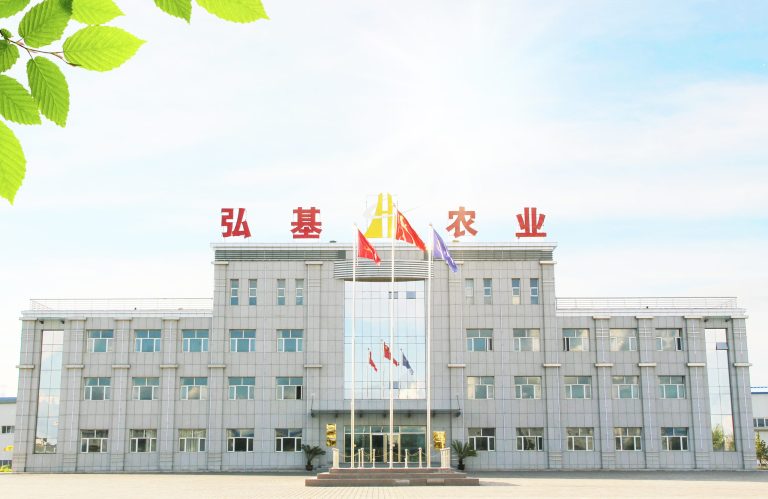
Authored by the Hongji Agriculture Application & Process Engineering Team — application and process engineers at the Hongji Agriculture processing facility, Zhangjiakou, Hebei Province, China — based on factory application-development trials and production data. Reviewed by the Quality & Food Safety Department before publication.
Factory certifications: ISO 22000 (food safety management) · FSSC 22000 (GFSI-benchmarked) · HACCP · Halal · Kosher · Organic (EU/USDA).
Full application guides, datasheets, and the Certificate of Analysis (CoA) are published on the Technical Knowledge Center and ship with every order.
Related Articles
- Potato Flakes for Gluten-Free & Clean-Label Bakery
- Instant Mashed Potato for Food Service & CPG
- What Are Potato Flakes? The Complete Industrial Guide
- Hongji Potato Flakes — Product
- Bakery Application Guide (Technical)
- Snacks & Extrusion Application Guide (Technical)
Sources & Verification
Inclusion rates, water-absorption figures, viscosity ranges, reconstitution ratios, and extrusion parameters are from Hongji Agriculture’s published technical application guides at docs.hjpotatoflakes.com. The derived figures — yield gains, expansion/density/hardness slopes (with R²), and thickening midpoints — are the author’s calculations from those published data points, shown with their method. Specific values vary by grade and production batch; confirm against the Certificate of Analysis for your order.
Author: Hongji Agriculture Application & Process Engineering Team · Reviewed: Quality & Food Safety Department · Last updated: 2026-08-29