HACCP Food Safety System for Potato Flakes Manufacturing
Preventive Hazard Control Throughout the Entire Potato Flake Production Process
Food safety is not achieved through final product inspection alone—it is built into every step of the manufacturing process.
At HJ Potato Flakes, our potato flake production system is designed around the principles of Hazard Analysis and Critical Control Point (HACCP), an internationally recognized preventive food safety methodology used throughout the global food industry.
Rather than relying solely on laboratory testing after production, our HACCP program focuses on identifying potential hazards before they occur, establishing preventive controls, continuously monitoring critical operating parameters, documenting every production batch, and implementing corrective actions whenever deviations are detected.
From the moment fresh potatoes arrive at our processing facility until finished potato flakes are packaged and prepared for shipment, every stage follows documented operating procedures designed to minimize biological, physical, and chemical hazards while maintaining product quality, consistency, and traceability.
The manufacturing process integrates raw material inspection, automated processing equipment, thermal processing validation, sanitation management, magnetic separation, metal detection, and batch identification into a comprehensive food safety management system that supports international food manufacturers, ingredient distributors, and industrial food processors.
Why HACCP Is Essential for Potato Flake Production
Dehydrated potato flakes are produced through a complex manufacturing process involving water handling, steam treatment, cooking, drying, mechanical conveying, size reduction, and packaging. Each stage introduces different food safety considerations that require systematic monitoring and control.
Unlike many dry food ingredients that undergo limited processing, potato flakes pass through multiple thermal and mechanical operations before becoming a shelf-stable product. Changes in temperature, moisture content, equipment operation, and product movement must all be carefully managed to ensure food safety and consistent product performance.
A preventive HACCP system helps manufacturers control risks before they affect finished products by identifying:
- Potential biological hazards associated with raw agricultural materials
- Physical hazards such as stones, metal fragments, and foreign materials
- Chemical hazards related to approved processing aids and sanitation procedures
- Equipment-related contamination risks
- Process deviations that could affect product quality or food safety
Through continuous monitoring, documented operating procedures, employee training, and verification activities, HACCP transforms food safety from reactive inspection into proactive process management.
Our HACCP Philosophy
At HJ Potato Flakes, HACCP is implemented as part of an integrated manufacturing management system rather than as an isolated quality program.
Food safety begins with carefully selected raw potatoes and continues through every production operation, including washing, peeling, blanching, cooking, drying, grinding, packaging, storage, and shipment.
Each production stage has defined operating parameters, monitoring requirements, sanitation procedures, equipment maintenance schedules, and documentation requirements that work together to reduce risk throughout the manufacturing process.
This preventive approach provides several important advantages:
- Consistent product quality between production batches
- Improved control of physical contamination
- Stable moisture content and product performance
- Complete batch traceability
- Reliable production documentation
- Increased confidence for food manufacturers and industrial customers
HACCP Objectives
The primary objectives of our HACCP system include:
Protect Consumer Food Safety
Identify and control potential hazards before they enter finished products through preventive manufacturing controls rather than relying solely on finished product inspection.
Maintain Consistent Manufacturing Quality
Establish validated production parameters for each processing stage to ensure uniform product characteristics including moisture, particle size, color, texture, and rehydration performance.
Prevent Foreign Material Contamination
Implement multiple independent control measures—including washing, manual inspection, magnetic separation, and final metal detection—to minimize physical contamination risks.
Support International Food Manufacturing Requirements
Operate standardized production procedures that align with internationally recognized food safety management principles and customer supplier qualification programs.
Ensure Complete Product Traceability
Maintain comprehensive production records that allow every finished product batch to be traced back through processing records to incoming raw materials.
HACCP System Coverage
Our HACCP program covers the complete manufacturing process from raw potato receiving through finished product storage.
| Manufacturing Stage | Primary Food Safety Control |
|---|---|
| Raw Material Receiving | Supplier approval and incoming inspection |
| Potato Storage | Controlled storage conditions |
| Stone Removal & Washing | Removal of soil, stones, and foreign materials |
| Steam Peeling | Controlled thermal peeling process |
| Brush Peeling | Removal of residual peel |
| Post-Washing | Surface cleaning and recirculated water management |
| Manual Inspection | Removal of defective potatoes and foreign materials |
| Hydraulic Slicing | Uniform product preparation |
| Blanching | Enzyme inactivation and process stabilization |
| Cooling | Controlled product temperature reduction |
| Cooking | Complete thermal processing |
| Mashing | Controlled mechanical processing |
| Drum Drying | Moisture reduction and shelf stability |
| Grinding & Sieving | Particle size consistency |
| Magnetic Separation | Ferrous metal removal |
| Packaging | Product protection and identification |
| Metal Detection (CCP) | Final physical hazard control |
| Warehouse Storage | Batch management and dispatch |
Each manufacturing stage is supported by documented operating procedures, sanitation programs, equipment maintenance, employee training, and quality verification activities.
The Preventive Food Safety Approach
Traditional quality systems often depend heavily on testing finished products after manufacturing has been completed.
A HACCP-based system shifts the focus toward prevention.
Instead of asking whether a finished product meets specifications after production, the HACCP approach continuously asks:
- What hazards could occur at this processing stage?
- How can these hazards be prevented?
- Which operating parameters must be monitored?
- What records demonstrate process control?
- What corrective actions are required if deviations occur?
This preventive philosophy is applied throughout our potato flake production line, allowing food safety to be managed systematically rather than inspected at the end of production.
From Raw Potato to Finished Potato Flakes
Fresh potatoes undergo a carefully controlled sequence of processing operations designed to preserve the natural characteristics of the potato while producing a stable, high-quality dehydrated ingredient.
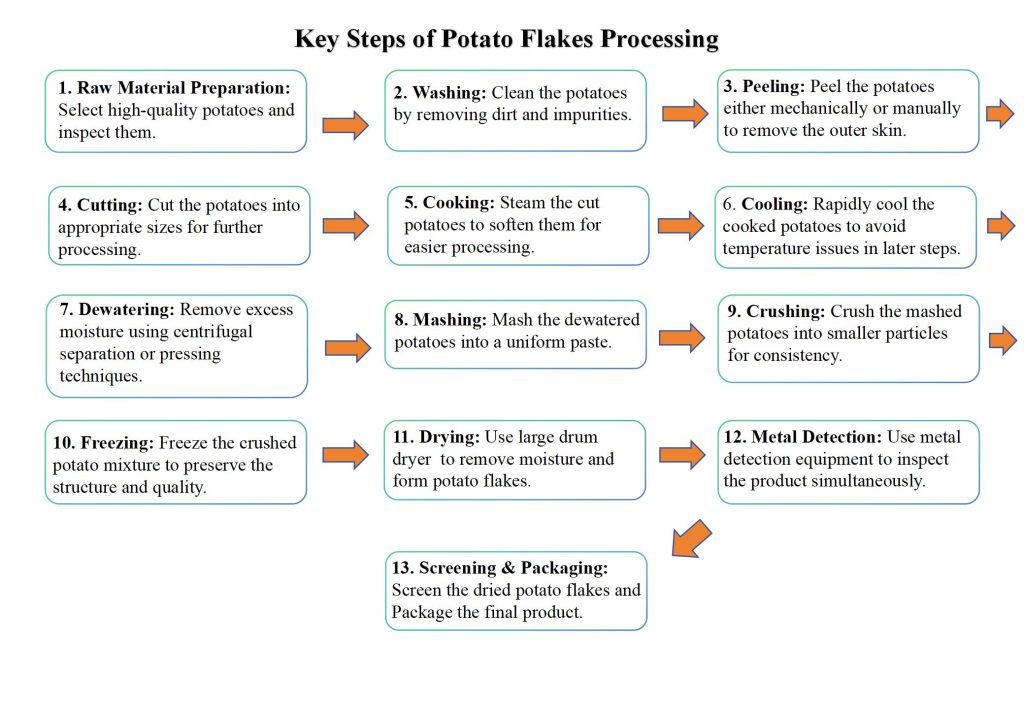
The production flow includes:
1.Raw Material Acceptance:Critical Gate 1。
Every incoming lot of Atlantic/Shepody potatoes undergoes violent destoning, continuous washing, and strict visual trimming to eliminate soil, stones, and defective crops before entering the line.
2.Advanced Steam Peeling:PLC Controlled。
Exposed briefly to high-pressure steam (0.8–1.5 MPa). The outer skin separates naturally with minimal flesh loss, rapidly reducing surface microbial load.
3.Validated Blanching & Cooling:Enzyme Inactivation。
Slices are heated at 65–83°C to fully deactivate peroxidase/catalase, then rapidly cooled to ≤30°C to fix starch chains and optimize cell wall elasticity.
4.Precise Cooking & Gentle Mashing:Cell Integrity Preservation。
Controlled steam cooking (92–99°C) achieves complete starch gelatinization. Gentle mashing separates cells without tearing them, avoiding sticky textures.
5.Precision Drum Drying:Moisture Control。
The mash is spread into a 0.20–0.25 mm thin film. Steam pressure and drum speed are regulated to keep finished moisture strictly below 9% for storage stability.
6.Multi-Stage Physical Hazard Barriers:Critical Control Point (CCP)。
Flakes pass through double-layer ≥8,000 Gauss magnetic separators (cleaned every 4 hours), followed by 100% individual sealed-bag passage through calibrated Metal Detectors (CCP).
Each operation contributes specific food safety, quality, and process control functions that together form a comprehensive preventive manufacturing system.
Raw Material Control and Early-Stage Hazard Prevention
The effectiveness of a HACCP system depends largely on controlling hazards before they enter the production line. For potato flake manufacturing, food safety begins long before cooking or drying—it starts with the quality of fresh potatoes received from approved suppliers.
HJ Potato Flakes applies preventive control measures throughout raw material receiving, storage, washing, peeling, trimming, and slicing to reduce biological, physical, and quality-related risks before thermal processing begins.
Raw Material Acceptance
The Foundation of Safe Potato Flake Production
Fresh potatoes are the only major raw material used in potato flake manufacturing. Because potatoes are an agricultural product, natural variation exists between harvest seasons, growing regions, and storage conditions.
Incoming inspection is therefore the first preventive control point within the manufacturing system.
Each delivery is evaluated against documented raw material specifications before entering production.
Typical inspection items include:
- Potato variety
- External appearance
- Maturity
- Freshness
- Mechanical damage
- Disease symptoms
- Green discoloration
- Foreign materials
- Storage condition
- Transportation condition
Only potatoes meeting production requirements are accepted into the processing system.
Lots that fail to meet specification requirements are identified, isolated, and handled according to documented quality procedures.
Hazard Analysis — Raw Material Receiving
| Hazard Category | Potential Hazard | Preventive Control |
|---|---|---|
| Biological | Rotting potatoes, mold, microbial growth | Incoming inspection and supplier approval |
| Physical | Stones, soil, wood, plastic, foreign objects | Visual inspection before unloading |
| Chemical | Agricultural residues outside specification | Approved supplier management and testing programs |
Incoming inspection records are maintained to support complete batch traceability.
Raw Potato Storage
After acceptance, potatoes are transferred into designated storage areas before production scheduling.
Proper storage is important because potatoes remain biologically active after harvest. Temperature, ventilation, humidity, and storage duration all influence processing quality.
Controlled storage helps maintain:
- Stable dry matter content
- Suitable reducing sugar levels
- Uniform cooking characteristics
- Consistent flake color
- Reduced spoilage risk
Inventory rotation follows documented production planning procedures to minimize excessive storage periods.
Stone Removal and Primary Washing
Removing Physical Contaminants Before Processing
Freshly harvested potatoes typically contain soil, sand, stones, and field debris attached to the surface.
Removing these contaminants at the beginning of production protects downstream equipment while reducing physical hazards entering later processing stages.
Potatoes are transported into a screw-type stone removal and washing system using flowing water.
Because stones are significantly heavier than potatoes, they naturally settle to the bottom of the separator and are discharged through the stone removal conveyor.
The potatoes continue into the washing section where rotating water movement loosens and removes:
- Soil
- Sand
- Small stones
- Plant debris
- Surface dust
- Loose foreign materials
A final spray rinse further cleans the potato surface before transfer to the peeling system.
HACCP Hazard Control During Washing
Primary washing serves several important food safety functions:
Physical Hazard Reduction
The washing process removes materials that could otherwise damage processing equipment or contaminate finished products.
These include:
- Stones
- Gravel
- Sand
- Soil clumps
- Plant residue
Equipment Protection
Foreign materials entering steam peelers, slicing equipment, or pumps may damage machinery or reduce process efficiency.
Early removal helps maintain stable equipment operation throughout production.
Surface Cleanliness
Although washing is not intended as a microbial kill step, it significantly reduces visible contamination on the potato surface before thermal processing.
Water Management
Water quality is an important consideration throughout potato processing.
During washing operations:
- Water circulation systems are continuously maintained.
- Fresh water is added to maintain washing efficiency.
- Wastewater is directed to the wastewater treatment system.
- Process water does not contact finished products after drying.
Proper water management supports both food safety and environmental responsibility.
Steam Peeling
Controlled Thermal Peeling Technology
After washing, potatoes are transported by inclined conveyor into the steam peeling system.
Steam peeling removes potato skin quickly while minimizing loss of edible potato tissue.
Unlike mechanical abrasion alone, steam peeling briefly exposes potatoes to high-pressure steam.
The outer skin rapidly heats, softens, expands, and separates naturally from the underlying potato.
This method improves peeling efficiency while preserving yield.
Process Parameters
Typical operating conditions include:
| Parameter | Operating Range |
|---|---|
| Steam Pressure | 0.8–1.5 MPa |
| Steam Exposure Time | 15–45 seconds |
| Process Control | Fully automated PLC system |
The automated control system regulates:
- Feeding time
- Steam injection
- Pressure control
- Discharge timing
This minimizes process variation between production batches.
Food Safety Contribution of Steam Peeling
Steam peeling provides several preventive food safety benefits.
Surface Microbial Reduction
High-temperature steam reduces the microbial load present on potato skins before subsequent processing.
Improved Peeling Consistency
Uniform peel removal decreases the likelihood that damaged or contaminated peel remains attached during downstream processing.
Reduced Product Loss
Because only the outer skin is softened, edible potato tissue remains largely intact, improving manufacturing efficiency while maintaining product quality.
Dry Brush Peeling
Removal of Residual Peel
After steam peeling, a small amount of peel may remain attached to the potato surface.
The potatoes therefore enter a dry brush peeling system equipped with rotating nylon brushes.
As potatoes move through the equipment:
- Gentle friction removes remaining peel.
- Surface cleaning continues.
- Loose peel fragments are separated from potatoes.
- Potatoes are cleaned on all sides before washing.
Residual peel is collected separately and transferred to designated residue handling systems.
Environmental and By-product Management
Potato peel generated during processing is collected through enclosed handling systems.
Instead of entering finished products, peel residues are directed into collection tanks before being transported for approved agricultural utilization, such as livestock feed where permitted by local regulations.
This controlled separation helps maintain production hygiene while reducing waste.
Post-Washing
Following brush peeling, potatoes undergo another washing stage.
The objectives of post-washing include:
- Removing loosened peel fragments
- Removing remaining surface residue
- Preparing potatoes for manual inspection
- Improving visibility during sorting
Inside the rotating drum washer, potatoes tumble gently while clean water sprays continuously over the product.
Water passes through filtration systems before recirculation.
Fresh water is continuously added to maintain washing effectiveness.
HACCP Controls During Post-Washing
Food safety controls include:
- Continuous water circulation
- Filtration of suspended solids
- Separation of peel residues
- Routine sanitation of equipment
- Controlled wastewater discharge
These measures reduce the transfer of contaminants into subsequent processing stages.
Manual Visual Inspection
Human Inspection Remains an Essential Food Safety Control
Although modern potato processing relies heavily on automated equipment, trained personnel continue to play an essential role in identifying defects that machines cannot always detect reliably.
Following washing, potatoes pass slowly across an inspection table where trained operators visually examine every potato.
Inspection personnel remove potatoes or potato portions showing unacceptable defects before slicing.
Defects Removed During Inspection
Operators remove:
- Green potato tissue
- Rotten potatoes
- Blackened areas
- Diseased tissue
- Potato eyes
- Mechanical damage
- Residual peel
- Foreign materials
Only potatoes meeting quality requirements continue into production.
Rejected material is immediately separated from acceptable product and transferred to designated waste collection areas.
Why Manual Inspection Matters
Visual inspection improves both food safety and finished product quality.
Removing defective potatoes helps:
- Improve finished product appearance
- Maintain natural potato flavor
- Reduce discoloration
- Improve processing consistency
- Prevent poor-quality raw materials from entering thermal processing
Although automated optical sorting technologies continue to evolve, trained operators remain an important component of comprehensive food safety management in many potato processing facilities.
Thermal Processing Controls: From Slicing to Mashing
After raw potatoes have been inspected, cleaned, and trimmed, the manufacturing process enters its most critical phase. This section of the production line transforms fresh potato tissue into a stable mashed potato base through carefully controlled slicing, blanching, cooling, cooking, and mashing operations.
These thermal processing stages are essential not only for product quality, but also for process consistency, enzyme control, texture development, and preparation for efficient dehydration.
Each operation is monitored using validated process parameters that help maintain consistent product performance while supporting the overall HACCP food safety system.
Hydraulic Slicing
Producing Uniform Potato Slices for Consistent Heat Transfer
Uniform slice thickness is one of the most important factors affecting downstream thermal processing.
If slices are too thick, heat penetration during blanching and cooking may become inconsistent. If slices are too thin, excessive cell damage and starch loss may occur, affecting mash quality and final flake performance.
To achieve consistent processing, potatoes enter a hydraulic slicing system where they are conveyed by flowing water through precision cutting blades.
Unlike conventional mechanical feeding systems, hydraulic conveying minimizes mechanical impact while ensuring a continuous and stable product flow.
The slicing system produces smooth, uniform potato slices with a typical thickness of 8–12 mm, allowing heat to penetrate evenly during subsequent blanching and cooking.
After slicing, excess process water is removed in a drum dewatering unit before the slices are transferred to the blanching system.
Food Safety and Quality Benefits of Uniform Slicing
Consistent slice dimensions provide several manufacturing advantages.
Uniform Heat Distribution
Even slice thickness allows all potato slices to receive similar thermal treatment, reducing process variation between individual pieces.
Improved Cooking Consistency
Uniform slices reach the desired internal temperature at approximately the same rate, supporting consistent starch gelatinization throughout the batch.
Reduced Mechanical Damage
Hydraulic conveying minimizes unnecessary impacts that could rupture potato cells before cooking.
Preserving cellular structure is important because intact potato cells contribute significantly to the desirable texture and rehydration performance of finished potato flakes.
Blanching
The First Controlled Thermal Processing Stage
Blanching is one of the most scientifically important operations in potato flake manufacturing.
Although often misunderstood as simply heating potatoes, blanching performs several critical biochemical functions that directly influence the appearance, texture, flavor, and processing characteristics of the finished product.
Fresh potatoes naturally contain active enzymes, including peroxidase and catalase. If these enzymes remain active during production, they can trigger enzymatic browning, accelerate quality deterioration, and negatively affect product color during storage.
Controlled blanching inactivates these enzymes before further processing.
Typical Operating Parameters
| Process Parameter | Typical Range |
|---|---|
| Temperature | 65–83°C |
| Residence Time | 15–35 minutes |
| Heating Medium | Steam and hot water mixture |
The blancher is designed to move potato slices slowly through a controlled heating environment, ensuring every slice receives uniform exposure.
Scientific Functions of Blanching
Blanching contributes to both food safety and product quality through several mechanisms.
Enzyme Inactivation
The primary objective is to deactivate naturally occurring enzymes responsible for enzymatic browning and quality deterioration.
This helps preserve the light cream color expected in premium potato flakes.
Cell Structure Stabilization
Controlled heating strengthens interactions between potato cells while reducing excessive cell rupture during later processing.
Maintaining cell integrity is one of the reasons high-quality potato flakes rehydrate into mashed potatoes with a smooth, natural texture instead of becoming excessively sticky.
Partial Starch Gelatinization
Blanching begins the starch transformation process.
Controlled gelatinization prepares the potato tissue for uniform cooking without causing excessive starch leakage.
Improved Mash Characteristics
Proper blanching helps individual potato cells separate more easily during mashing, producing a fluffy mashed potato structure with improved rehydration properties.
Cooling
Controlled Cooling Before Final Cooking
Immediately after blanching, potato slices enter a cooling system where they are exposed to counter-current cooling water.
At first glance, cooling before cooking may appear unnecessary. However, this operation plays an important role in optimizing the physical properties of potato tissue.
Rather than simply lowering product temperature, controlled cooling modifies the internal structure of the potato to improve downstream processing.
Typical Operating Parameters
| Parameter | Value |
|---|---|
| Product Temperature | ≤30°C |
| Residence Time | 15–35 minutes |
Why Cooling Improves Product Quality
Increased Cell Wall Elasticity
Gradual cooling allows cell membranes to contract naturally.
This improves the mechanical strength of potato cells before final cooking and mashing.
Reduced Free Starch
Cooling helps remove free starch released during blanching.
Lower levels of free starch reduce mash viscosity and help prevent sticky textures.
Better Rehydration Performance
Maintaining intact potato cells throughout thermal processing enables finished potato flakes to absorb water more evenly during reconstitution.
The result is mashed potatoes with improved texture and mouthfeel.
Cooking
Complete Thermal Cooking Under Controlled Steam Conditions
After cooling, potato slices enter the cooking system through an enclosed feeding arrangement that provides continuous and uniform product flow.
Cooking represents the primary thermal processing stage in potato flake manufacturing.
The objective is to cook every potato slice thoroughly while preserving as much cellular integrity as possible.
Unlike household boiling, industrial cooking systems are carefully controlled to achieve consistent heat transfer across large production volumes.
Typical Operating Parameters
| Parameter | Operating Range |
|---|---|
| Steam Pressure | 0.3–0.4 MPa |
| Product Temperature | 92–99°C |
| Cooking Time | 15–45 minutes |
Actual operating conditions may vary depending on potato variety, dry matter content, seasonal characteristics, and production requirements.
Objectives of Controlled Cooking
Complete Starch Gelatinization
Cooking converts potato starch into its fully gelatinized form, allowing the finished flakes to rehydrate rapidly when prepared by customers.
Uniform Softening
Consistent heating ensures that all potato slices reach the desired softness before mashing.
Uneven cooking may produce undesirable hard particles or inconsistent flake quality.
Stable Processing Conditions
Carefully controlled steam pressure and cooking time reduce batch-to-batch variation while supporting consistent product specifications.
Scientific Importance of Starch Gelatinization
Starch gelatinization is one of the key transformations occurring during potato processing.
As potato tissue is heated in the presence of moisture, starch granules absorb water and expand.
This process changes the internal structure of the potato, producing the smooth texture associated with mashed potatoes.
Proper gelatinization also improves:
- Water absorption
- Rehydration speed
- Product consistency
- Finished texture
- Processing stability
Incomplete gelatinization may reduce product performance, while excessive heating can damage cell structure and increase stickiness.
Maintaining the correct balance is therefore essential.
Mashing
Transforming Cooked Potatoes into a Uniform Mash
After cooking, softened potato slices are transferred directly into the mashing system.
The purpose of mashing is not to pulverize the potatoes completely, but rather to separate cooked potato tissue while preserving as many intact cells as possible.
This distinction is one of the defining characteristics of premium potato flake manufacturing.
Gentle Mechanical Processing
Inside the mashing machine, a screw conveyor gradually feeds cooked potatoes through a specially designed mash screen.
The equipment operates at controlled speed to avoid unnecessary cell rupture.
Maintaining intact potato cells contributes significantly to:
- Natural mashed potato texture
- Improved mouthfeel
- Reduced stickiness
- Better water absorption after rehydration
- Consistent finished flake quality
Process Aids
During mashing, carefully controlled amounts of approved food ingredients may be incorporated to improve processing stability and finished product performance.
Typical additions include:
| Ingredient | Primary Function |
|---|---|
| Mono- and Diglycerides | Improve texture and reduce stickiness during rehydration |
| Citric Acid | Helps reduce enzymatic browning and oxidation while maintaining product appearance |
These ingredients are used only within established food manufacturing specifications and are uniformly dispersed throughout the mash to ensure consistent product quality.
HACCP Considerations During Thermal Processing
The slicing, blanching, cooling, cooking, and mashing stages work together to achieve several preventive food safety objectives:
| Processing Stage | Primary HACCP Purpose |
|---|---|
| Hydraulic Slicing | Uniform product preparation for consistent heat transfer |
| Blanching | Enzyme inactivation and process stabilization |
| Cooling | Cell structure optimization and free starch reduction |
| Cooking | Complete thermal processing and starch gelatinization |
| Mashing | Controlled mechanical processing while preserving cell integrity |
Although the Critical Control Point (CCP) is established later at the metal detection stage, these thermal processing operations form the backbone of product consistency and preventive process control. Standard operating procedures, equipment monitoring, sanitation programs, and production records ensure each batch progresses through validated processing conditions before entering the drying and finishing stages.
Drying, Foreign Material Control, and Critical Control Point (CCP)
After the potatoes have been fully cooked and gently mashed, the manufacturing process enters the final transformation stage. During this phase, the moist potato mash is converted into shelf-stable potato flakes through precision drum drying, particle size control, magnetic separation, packaging, and final metal detection.
This section represents one of the most critical parts of the HACCP system because it combines product stabilization with multiple independent physical hazard control measures before the product leaves the production facility.
Rather than relying on a single inspection point, HJ Potato Flakes applies a multi-barrier contamination prevention strategy, where several independent control systems work together to minimize physical contamination risks.
Drum Drying
Converting Fresh Potato Mash into Shelf-Stable Potato Flakes
Fresh mashed potatoes contain a high percentage of water and therefore require dehydration to achieve the stability necessary for storage and transportation.
Drum drying is a highly efficient dehydration method widely used in potato flake manufacturing because it combines rapid moisture removal with gentle handling of the potato structure.
The mashed potato is transferred from the mash holding system to the drum dryer using a controlled pressure feeding system.
A rotor pump distributes the mash evenly across the rotating drying drum as a very thin film.
Maintaining a consistent film thickness is essential for achieving uniform drying across the entire production batch.
Typical Operating Parameters
| Process Parameter | Typical Operating Range |
|---|---|
| Steam Pressure | 0.8–1.2 MPa |
| Drum Surface Temperature | 120–240°C |
| Mash Film Thickness | 0.20–0.25 mm |
| Drum Speed | Approximately 1–10 rpm |
| Finished Moisture | Typically below 9% (or customer specification) |
Production operators continuously adjust steam pressure and drum rotation speed according to product characteristics, seasonal raw material variation, and customer requirements.
This ensures stable drying performance while maintaining product consistency.
Why Moisture Control Is Critical
Moisture is one of the most important quality indicators for dehydrated potato products.
Excess moisture may reduce storage stability and increase the risk of product deterioration, while excessive drying can negatively affect texture, color, and rehydration performance.
Maintaining the target moisture level provides several important benefits.
Improved Shelf Stability
Lower moisture content limits microbial growth and helps maintain product quality during storage.
Consistent Rehydration
Uniform drying allows potato flakes to absorb water evenly during food preparation.
Product Flowability
Properly dried flakes flow more consistently during packaging and industrial food manufacturing.
Stable Transportation
Controlled moisture reduces product caking during storage and shipment.
Formation of Potato Flakes
After drying, the thin layer of dehydrated potato is gently removed from the drum surface using precision scraper blades.
Instead of producing fine powder immediately, the dried sheet naturally breaks into large flakes.
These flakes retain much of the original potato cell structure developed during previous processing stages.
Preserving this structure is one of the reasons premium potato flakes produce smooth mashed potatoes after rehydration.
Flaking, Grinding, and Particle Size Control
Producing Consistent Product Specifications
Following drum drying, the large flakes enter a controlled size reduction system.
Rather than grinding aggressively, the process gradually reduces particle size while minimizing unnecessary mechanical damage.
The production sequence includes:
- Primary flake breaking
- Vacuum conveying
- Controlled flaking
- Grinding
- Particle size classification
- Final screening
Grinding speed is adjusted according to customer specifications and desired product characteristics.
Particle Size Classification
Finished products are screened through calibrated sieves to achieve consistent particle size distribution.
Typical screening specifications range from 16 to 40 mesh, depending on customer application.
Consistent particle size contributes to:
- Uniform mixing
- Stable bulk density
- Improved packaging efficiency
- Consistent hydration
- Better processing performance in downstream food manufacturing
Foreign Material Control Strategy
Multiple Independent Physical Hazard Barriers
One of the strengths of our HACCP system is that physical contamination is controlled through multiple independent barriers rather than relying on a single inspection point.
Each control step reduces the possibility that foreign materials progress further through the manufacturing process.
| Production Stage | Hazard Controlled |
|---|---|
| Stone Removal | Stones, gravel, heavy foreign materials |
| Washing | Soil and surface contaminants |
| Manual Inspection | Defective potatoes and visible foreign materials |
| Sieving | Oversized particles and processing irregularities |
| Magnetic Separation | Ferrous metal contamination |
| Metal Detection (CCP) | Final verification of packaged products |
This layered approach provides redundancy and significantly improves food safety reliability.
High-Strength Magnetic Separation
Continuous Ferrous Metal Removal
Following particle size classification, potato flakes pass through a double-layer magnetic separation system.
The magnetic separator is designed to continuously capture ferrous contaminants that could potentially originate from equipment wear or other processing sources.
The magnetic field strength is maintained at not less than 8,000 Gauss, providing strong magnetic attraction for ferrous particles before packaging.
Because magnetic separation operates continuously throughout production, it functions as an important preventive control before the Critical Control Point.
Magnetic Separator Verification Program
Effective magnetic separation requires regular inspection and documented maintenance.
HJ Potato Flakes implements a routine verification program that includes both equipment performance checks and cleaning procedures.
Magnetic Strength Verification
The Quality Control department verifies magnetic strength every 10 days.
If magnetic strength falls below 7,000 Gauss, the magnetic rods are replaced immediately to maintain effective contamination control.
This preventive maintenance program helps ensure consistent equipment performance throughout production.
Scheduled Cleaning Program
Magnetic rods are cleaned according to documented operating procedures.
Typical cleaning frequency includes:
- Every hour during the first three hours of production
- Every four hours during normal operation
If metal fragments larger than 3 mm are observed during cleaning, the inspection frequency is immediately increased to once every hour until normal operating conditions are restored.
This risk-based approach allows production personnel to respond quickly to abnormal equipment conditions.
Documented Cleaning Procedures
Cleaning activities follow standardized operating instructions to ensure consistency.
Typical procedures include:
- Cleaning and sanitizing hands before handling equipment
- Removing magnetic rods carefully
- Cleaning rods with approved alcohol and lint-free cloths
- Recording magnetic rod weight before and after cleaning
- Inspecting removed metal particles
- Collecting metal fragments larger than established criteria in labeled containers
- Recording production date, production shift, batch number, and operator information
- Returning cleaned magnetic rods to the production line after verification
These documented records provide objective evidence that preventive controls are functioning as intended.
Critical Control Point (CCP)
Final Metal Detection
Within the HACCP system, the finished product metal detection stage is designated as the primary Critical Control Point (CCP).
Every sealed package passes individually through a calibrated metal detector before entering finished product storage.
Unlike preventive control steps earlier in the process, the CCP serves as the final verification that packaged products meet established physical hazard requirements.
Metal Detector Performance Standards
The metal detection system is capable of identifying very small metal contaminants.
Typical detection sensitivity includes:
| Metal Type | Detection Capability |
|---|---|
| Ferrous (Fe) | ≤ 1.5 mm |
| Non-Ferrous | ≤ 2.4 mm |
| Stainless Steel (SUS) | ≤ 3.0 mm |
These sensitivity levels are verified using certified metal test pieces.
CCP Monitoring Procedures
To ensure continuous effectiveness, the metal detector undergoes routine operational verification throughout production.
Verification includes:
- Functional testing every four hours
- Verification using certified ferrous, non-ferrous, and stainless steel test pieces
- Recording inspection results
- Immediate corrective action if verification fails
Only products passing metal detection are released for finished goods storage.
Corrective Actions
If the metal detector alarms or verification results fall outside established limits, production personnel follow documented corrective procedures.
These may include:
- Immediate isolation of affected products
- Identification of the production batch
- Equipment inspection
- Investigation of the root cause
- Reinspection after corrective action
- Documentation of findings before production resumes
No product is released until the cause of the deviation has been identified and appropriate corrective measures have been completed.
Why Multiple Physical Hazard Controls Matter
A common misconception is that metal detection alone ensures product safety.
In reality, effective HACCP systems rely on multiple preventive barriers working together throughout the manufacturing process.
At HJ Potato Flakes, physical hazard control begins at raw potato receiving and continues through washing, trimming, sieving, magnetic separation, and finally metal detection.
Each individual control reduces risk, while the combination of all controls provides a far higher level of protection than any single inspection point alone.
This preventive, layered approach reflects internationally recognized HACCP principles and supports the consistent production of high-quality dehydrated potato ingredients for food manufacturers worldwide.
Packaging Control, Product Traceability, Sanitation Programs, and Continuous HACCP Verification
Food safety does not end when potato flakes leave the production line. After drying and foreign material control have been completed, every production batch continues through standardized packaging, coding, traceability, storage, and verification procedures designed to maintain product integrity until shipment.
These post-processing activities are an essential part of the HACCP system because they ensure that product identity, package integrity, and production records remain accurate throughout the supply chain.
Packaging Control
Protecting Product Quality After Processing
Packaging serves as the final physical barrier protecting potato flakes from moisture, environmental contamination, and handling damage during storage and transportation.
Before packaging begins, all packaging materials are inspected to ensure they meet internal quality specifications.
Production personnel verify:
- Correct packaging material
- Clean package condition
- Proper package size
- Printing accuracy
- Batch identification
- Production date coding
Only approved packaging materials are released for production.
Standard Packaging Procedure
HJ Potato Flakes uses a structured packaging procedure to maintain product consistency and package integrity.
The process typically includes:
- Filling the designated package with the required product weight.
- Removing excess air from the inner package.
- Sealing the inner liner securely.
- Folding and sealing the outer kraft paper bag.
- Performing weight verification.
- Transferring the finished package to metal detection.
This standardized procedure helps reduce handling variation while protecting product quality throughout distribution.
Packaging Materials
Finished potato flakes are packed using food-grade packaging materials suitable for dehydrated food ingredients.
The standard package consists of:
- Food-grade composite inner liner
- Multi-layer kraft paper outer bag
This packaging structure helps provide:
- Moisture protection
- Mechanical strength
- Product cleanliness
- Stable transportation performance
- Long-distance shipping reliability
Packaging materials are stored under controlled conditions before use to minimize contamination risks.
Weight Control
Accurate Package Weight Verification
Package weight consistency is important for both customer satisfaction and production control.
Each packaging machine is adjusted according to the specified package size before production begins.
For standard industrial packaging, the target filling weight is:
25 kg ± 20 g
Electronic weighing equipment continuously verifies package weight during production.
If weight falls outside the established tolerance, corrective adjustments are made before production continues.
Weight verification records become part of the batch production documentation.
Date Coding and Product Identification
Maintaining Accurate Production Records
Every finished package receives production identification that supports complete traceability.
The coding system typically includes:
- Production date
- Batch identification
- Production shift
- Product identification
Date coding follows standardized operating procedures.
Whenever the production date changes or printing equipment requires adjustment, production personnel perform verification before continuing normal operation.
Supervisors and Quality Control personnel confirm the accuracy of revised coding information to prevent labeling errors.
Batch Traceability System
Every Batch Has a Manufacturing History
One of the most important principles of modern food safety management is traceability.
Every finished package should be traceable back through the complete manufacturing process.
HJ Potato Flakes maintains production records linking finished products with the corresponding manufacturing information.
Typical traceability records include:
- Approved raw material supplier
- Incoming inspection records
- Production date
- Production shift
- Processing equipment
- Critical process parameters
- Quality inspection records
- Packaging information
- Metal detector verification
- Warehouse storage location
- Shipment records
This documentation allows rapid identification of production history whenever customer inquiries, quality reviews, or product investigations are required.
Benefits of Complete Traceability
A comprehensive traceability system supports both food safety and supply chain management.
It enables manufacturers to:
- Identify production history quickly
- Verify manufacturing conditions
- Support customer quality audits
- Investigate quality deviations efficiently
- Demonstrate production consistency
- Improve inventory management
- Facilitate targeted product recall if ever required
Because every production stage generates documented records, traceability extends from incoming potatoes to finished product shipment.
Good Manufacturing Practices (GMP)
The Foundation Supporting HACCP
HACCP does not operate independently.
Its effectiveness depends on strong prerequisite programs, particularly Good Manufacturing Practices (GMP).
GMP establishes the basic operating environment necessary for safe food production before hazard analysis is applied.
Within the potato flake manufacturing process, GMP supports:
- Personnel hygiene
- Facility cleanliness
- Equipment sanitation
- Controlled production flow
- Safe material handling
- Proper waste management
- Preventive equipment maintenance
Without these prerequisite programs, HACCP controls cannot function effectively.
Personnel Hygiene
Every employee entering production areas follows documented hygiene procedures designed to minimize contamination risks.
Typical hygiene requirements include:
- Clean protective clothing
- Hair restraints
- Hand washing before production
- Hand sanitization where required
- Controlled access to production areas
- Removal of personal items that may contaminate products
Personnel receive periodic food safety training to reinforce hygiene awareness and operational responsibilities.
Equipment Cleaning and Sanitation
Maintaining Hygienic Processing Conditions
Food processing equipment must be cleaned regularly to maintain efficient operation and reduce contamination risks.
Cleaning procedures are established for production equipment including:
- Washers
- Peelers
- Conveyors
- Slicers
- Blanchers
- Cookers
- Mashers
- Drum dryers
- Packaging equipment
Cleaning schedules are developed according to equipment usage, production planning, and sanitation requirements.
Documented cleaning activities help verify that equipment remains suitable for food production.
Production Environment Management
A hygienic manufacturing environment supports consistent food safety performance.
Routine environmental management includes:
- Cleaning production floors
- Waste removal
- Drainage maintenance
- Air circulation management
- Equipment housekeeping
- Separation of waste materials
- Controlled movement of raw and finished products
These practices reduce the possibility of cross-contamination during production.
Waste Management
Controlled Handling of Processing By-products
Potato processing naturally generates by-products such as:
- Potato peel
- Defective potatoes
- Trimmed potato tissue
- Process residues
These materials are separated immediately from food production areas.
Collection points are clearly designated to prevent accidental mixing with finished products.
Where permitted by applicable regulations, certain potato processing residues may be transferred for agricultural utilization, helping reduce waste while maintaining hygienic production conditions.
Preventive Equipment Maintenance
Reliable equipment performance is an important component of food safety.
Preventive maintenance programs reduce unexpected equipment failures that could affect product quality or production efficiency.
Maintenance activities typically include:
- Mechanical inspection
- Lubrication according to food-grade requirements
- Component replacement
- Calibration verification
- Operational testing
Maintenance records provide additional documentation supporting HACCP verification.
Employee Training
Building Food Safety Awareness
A HACCP system depends not only on equipment but also on trained personnel.
Employees involved in production receive training appropriate to their responsibilities.
Training topics typically include:
- HACCP principles
- Food safety awareness
- Personal hygiene
- Equipment operation
- Foreign material prevention
- Cleaning procedures
- Documentation requirements
- Corrective actions
- Product traceability
Continuous training helps maintain consistent implementation of standardized operating procedures throughout the facility.
HACCP Verification and Continuous Improvement
A HACCP system is not static.
Its effectiveness depends on continuous verification and ongoing improvement.
HJ Potato Flakes regularly reviews production data, monitoring records, inspection results, equipment performance, and corrective action reports to confirm that preventive controls continue to operate as intended.
Verification activities may include:
- Review of CCP monitoring records
- Internal quality inspections
- Equipment calibration
- Magnet strength verification
- Metal detector performance testing
- Process parameter review
- Batch documentation audits
- Trend analysis of production data
Whenever opportunities for improvement are identified, operating procedures are updated, employees receive additional training when necessary, and corrective actions are documented to strengthen the overall food safety management system.
HACCP Is More Than a Certification
At HJ Potato Flakes, HACCP is implemented as a practical, process-driven management system rather than simply a certification requirement.
From supplier approval and raw potato inspection to thermal processing, moisture control, magnetic separation, metal detection, packaging, and traceability, every stage contributes to a comprehensive preventive food safety strategy.
By integrating scientific process control, documented operating procedures, employee training, equipment verification, and continuous monitoring, we strive to deliver dehydrated potato ingredients that meet the expectations of food manufacturers, industrial processors, and international customers seeking consistent quality, reliable supply, and transparent manufacturing practices.
Scientific Principles Behind Our HACCP Controls
A Hazard Analysis and Critical Control Point (HACCP) system is most effective when preventive controls are based on scientific principles rather than routine inspection alone.
Throughout the potato flake manufacturing process, each control measure is designed to manage a specific food safety or quality risk using validated processing parameters and documented operating procedures.
Rather than relying on finished product testing as the primary safeguard, our manufacturing philosophy emphasizes prevention, continuous monitoring, and process verification throughout production.
The following sections explain the scientific purpose behind several important processing controls used in potato flake manufacturing.
Why Multiple Washing Steps Are Necessary
Fresh potatoes are harvested directly from agricultural fields and naturally carry soil, sand, stones, and plant debris.
A single washing operation cannot reliably remove every contaminant.
For this reason, washing is performed at multiple stages throughout production.
The first washing stage removes heavy field contaminants before peeling.
Post-peeling washing removes loosened skin fragments.
Additional water handling systems help transport potatoes while continuously separating unwanted materials from the product stream.
Using multiple washing stages significantly reduces physical contamination before potatoes reach thermal processing.
Why Steam Peeling Is Preferred Over Conventional Mechanical Peeling
Steam peeling offers several advantages over abrasion-only peeling methods.
High-pressure steam rapidly heats only the outer potato skin.
As pressure is released, the skin separates naturally from the potato surface with minimal removal of edible tissue.
This process improves:
- Raw material yield
- Peeling efficiency
- Product consistency
- Surface cleanliness
- Downstream processing stability
Because less edible potato tissue is removed, steam peeling also contributes to improved production efficiency and more consistent finished product quality.
Why Blanching Is Essential Before Cooking
Blanching is often misunderstood as an initial cooking step.
In reality, its primary purpose is biochemical rather than culinary.
Fresh potatoes contain naturally occurring enzymes that remain active after harvest.
Without blanching, these enzymes may continue to function during processing, leading to:
- Enzymatic browning
- Color deterioration
- Reduced storage stability
- Increased product variation
Controlled blanching deactivates these enzymes while beginning the starch transformation process and preparing potato tissue for uniform cooking.
Why Controlled Cooling Improves Rehydration
Cooling immediately after blanching may appear unnecessary, yet it serves several important technological purposes.
Gradual cooling allows potato cell membranes to stabilize before final cooking.
This helps preserve cellular structure, reduce free starch on the potato surface, and improve the texture of the finished mashed potato after rehydration.
The result is potato flakes that produce a lighter, smoother mash with reduced stickiness and improved water absorption.
Why Gentle Mashing Produces Better Potato Flakes
One common misconception is that finer grinding always produces better potato flakes.
In fact, excessive mechanical force damages potato cells.
Premium potato flakes are produced by gently separating cooked potato tissue while preserving as many intact potato cells as possible.
Maintaining cell integrity improves:
- Natural texture
- Creamy mouthfeel
- Uniform rehydration
- Reduced paste formation
- Consistent product appearance
This is one of the key technical differences between high-quality potato flakes and lower-grade dehydrated potato products.
Why Moisture Control Is More Important Than Drying Temperature
Many people assume higher drying temperatures automatically produce better dehydration.
In reality, finished moisture content is the more important quality indicator.
Excess moisture may shorten shelf life, while excessive drying can damage flavor, color, and texture.
For this reason, drum drying is continuously adjusted by controlling several variables simultaneously, including:
- Steam pressure
- Drum temperature
- Drum rotation speed
- Product film thickness
- Feed rate
These parameters work together to achieve stable finished moisture while protecting the natural characteristics of the potato.
Why Magnetic Separation Alone Is Not Enough
Magnetic separators effectively capture ferrous metal particles.
However, they cannot detect every possible foreign material.
For this reason, magnetic separation functions as one layer within a comprehensive physical hazard control system.
Additional protective measures include:
- Stone removal
- Washing
- Manual inspection
- Sieving
- Equipment maintenance
- Final metal detection
Using multiple independent barriers provides significantly greater protection than relying on a single inspection step.
Why Metal Detection Is the Critical Control Point (CCP)
Within our HACCP plan, finished product metal detection is designated as the Critical Control Point because it represents the final opportunity to identify metallic contamination before products enter finished goods storage and distribution.
Unlike earlier preventive controls, the CCP requires documented verification at defined intervals using certified metal test pieces.
If verification does not meet established requirements, production is stopped, affected product is isolated, corrective actions are implemented, and the equipment must successfully pass re-verification before production resumes.
This systematic approach helps ensure that the effectiveness of the CCP is continuously confirmed throughout production.
HACCP Monitoring Records
An effective HACCP system depends on accurate and complete documentation.
Production records provide objective evidence that preventive controls have been implemented according to established procedures.
Typical HACCP-related records maintained during potato flake manufacturing include:
| Record Type | Purpose |
|---|---|
| Raw Material Receiving Records | Verify incoming potato quality and supplier approval |
| Production Batch Records | Document production history and processing conditions |
| Equipment Inspection Records | Confirm equipment operates correctly |
| Steam Pressure Records | Verify thermal processing parameters |
| Blanching Temperature Records | Monitor enzyme inactivation conditions |
| Cooking Time Records | Verify complete thermal processing |
| Drum Drying Records | Monitor moisture control parameters |
| Magnetic Separator Inspection Logs | Verify magnetic strength and cleaning frequency |
| Metal Detector Verification Records | Demonstrate CCP compliance |
| Packaging Weight Records | Confirm package accuracy |
| Product Traceability Records | Link finished products to manufacturing history |
| Corrective Action Reports | Document deviations and resolution |
Maintaining complete records supports internal verification, customer audits, regulatory inspections, and continuous process improvement.
HACCP Prerequisite Programs Supporting Food Safety
The HACCP plan is supported by a series of prerequisite programs that establish the environmental and operational conditions necessary for safe food production.
These programs work together to reduce the likelihood of hazards before critical control measures are applied.
| Prerequisite Program | Primary Objective |
|---|---|
| Good Manufacturing Practices (GMP) | Personnel hygiene and production discipline |
| Sanitation Standard Operating Procedures (SSOP) | Cleaning and sanitation control |
| Preventive Maintenance | Reliable equipment performance |
| Calibration Program | Measurement accuracy |
| Supplier Approval Program | Raw material consistency |
| Pest Management | Facility protection |
| Personnel Training | Consistent HACCP implementation |
| Product Traceability | Rapid product identification and recall capability |
These prerequisite programs form the operational foundation upon which the HACCP system is built.
Our Commitment to Food Safety
At HJ Potato Flakes, HACCP is integrated into daily manufacturing operations rather than treated as a standalone compliance requirement.
Every stage of production—from receiving fresh potatoes to packaging finished potato flakes—is governed by documented operating procedures, validated processing parameters, equipment verification, sanitation practices, and continuous monitoring.
By combining scientific process control with comprehensive documentation and preventive hazard management, we strive to supply potato flakes and potato powder that meet the expectations of global food manufacturers for safety, consistency, and dependable quality.
Frequently Asked Questions
Q1: Why does HJ Potato Flakes designate final Metal Detection as the absolute Critical Control Point (CCP)?
Because it represents the definitive, non-redundant safeguard before products enter the logistics chain. Our inline digital metal detectors are calibrated to catch tiny remnants (Ferrous ≤1.5mm, Non-Ferrous ≤2.4mm, Stainless Steel ≤3.0mm). System functionality is checked every 4 hours using certified validation test pieces, and any alarm triggers an immediate automated line-isolation protocol.
Q2: How do your dual-layer magnetic separators support the final CCP?
Magnetic separation serves as a crucial preventive upstream barrier. Positioned right after particle size classification, our 8,000 Gauss high-strength magnetic rods capture ferrous equipment-wear microparticles before packaging. We pull and clean these rods every 4 hours and recalibrate their Gauss strength every 10 days, heavily reducing the physical hazard load before the product ever reaches the final metal detector.
Q3: How does your thermal processing parameters explicitly guarantee microbiological safety?
Our core thermal loop features two high-heat steps: industrial steam peeling at 0.8–1.5 MPa and pressurized cooking at 92–99°C for up to 45 minutes. This dual thermal kill validation effectively neutralizes pathogens associated with raw agricultural root crops, transitioning the raw mash into a highly stable pasteurized state prior to dehydration.
Q4: Can Hongji provide comprehensive batch records for our global trace audits?
Absolutely. Driven by our fully integrated supply chain, every bag is code-stamped to tie back to a complete batch manufacturing record. This allows us to instantly trace the product’s entire lifecycle—from the exact contract farming crop delivery log, water/steam parameter charts, and hourly quality lab sheets, all the way to shipping container numbers.