Proceso de fabricación de copos de patata
From Seed to Finished Potato Ingredients
At HONGJI Agriculture, manufacturing is not a single production step—it is a fully integrated seed-to-finished-product industrial system.
Unlike many suppliers that rely on externally sourced raw materials, we maintain end-to-end control over the entire potato value chain, from seed breeding and agricultural cultivation to industrial dehydration and final packaging.
This vertically integrated model enables:
- Stable batch-to-batch consistency
- Full supply chain traceability
- Controlled raw material specifications
- Reduced seasonal variability
- Higher food safety assurance
With decades of agricultural expertise combined with modern dehydration technology, our production system is designed to deliver industrial-grade potato flakes and powders with consistent functional performance.
1. Potato Variety Selection (Seed Breeding Foundation)
The manufacturing process begins at the genetic level.
Through our dedicated breeding division (HONGJI Seed), we continuously evaluate and select potato varieties specifically optimized for dehydration processing.
Key selection criteria include:
- High dry matter content for efficient dehydration
- Stable starch composition for consistent texture
- Uniform tuber size for processing efficiency
- Strong disease resistance to ensure field stability
- Excellent color retention after thermal processing
- High rehydration performance for industrial applications
Each selected variety undergoes multi-season field validation before being approved for large-scale cultivation.
This ensures that the final product quality is embedded at the genetic and agricultural origin stage, not adjusted later in processing.
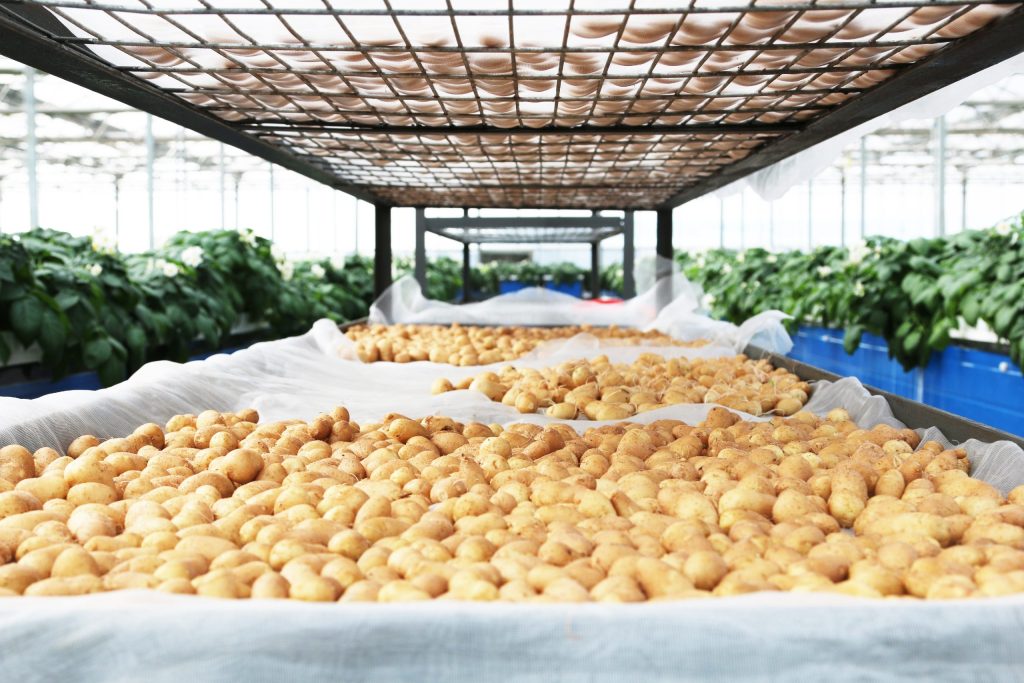
Our potato flakes are produced from carefully selected premium potato varieties, including Atlantic, Shepody, Russet Burbank, and other high-quality processing cultivars.
2. Standardized Agricultural Cultivation
Once approved varieties are selected, cultivation is executed under a standardized agronomic management system.
All farms follow structured agricultural protocols designed to reduce variability between growing regions and harvest cycles.
Core agricultural control areas:
- Soil composition monitoring and conditioning
- Irrigation and water regulation systems
- Precision nutrient and fertilizer management
- Integrated pest and disease control (IPM approach)
- Controlled harvesting windows based on dry matter index
Agronomic data is continuously monitored to ensure each harvest meets predefined industrial processing standards.
This stage ensures that raw materials entering the factory are already technically aligned with dehydration requirements.

Hongji Potato Breeding Center
3. Controlled Fresh Potato Storage
After harvesting, potatoes are transferred into controlled storage facilities before processing.
Storage conditions are carefully managed to preserve raw material integrity and processing efficiency.
Storage objectives:
- Maintain natural moisture balance
- Preserve starch and dry matter stability
- Prevent enzymatic degradation
- Protect color and flavor profile
- Ensure year-round production continuity
By stabilizing raw material supply, we are able to maintain continuous production schedules independent of seasonal harvest cycles.
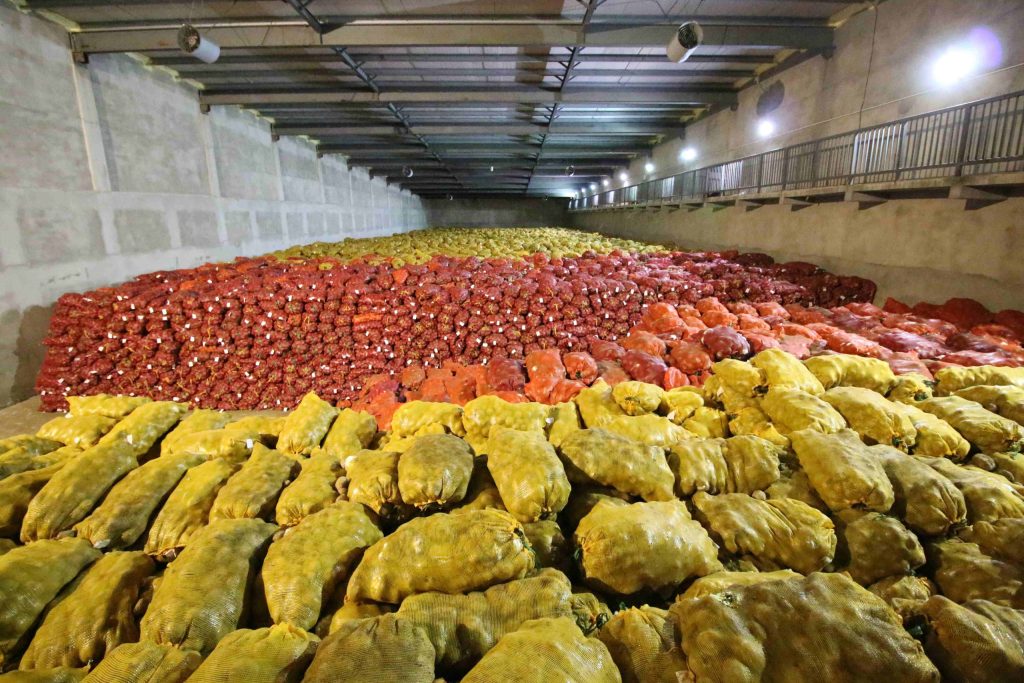
Hongji Potato Storage
4. Cleaning, Peeling and Raw Material Preparation
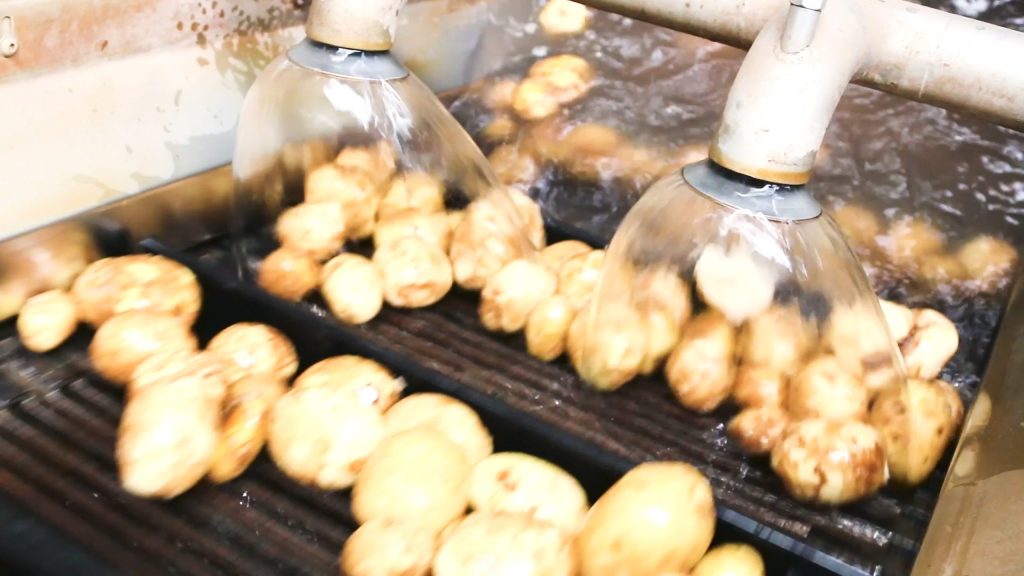
Before industrial processing, potatoes undergo a multi-stage cleaning and preparation system.
Processing steps include:
- High-pressure washing
- Stone and foreign material removal
- Mechanical peeling
- Visual and optical inspection
- Size and quality sorting
Only potatoes that meet strict internal standards are allowed to enter the thermal processing line.
This stage plays a critical role in ensuring food safety, process efficiency, and final product purity.
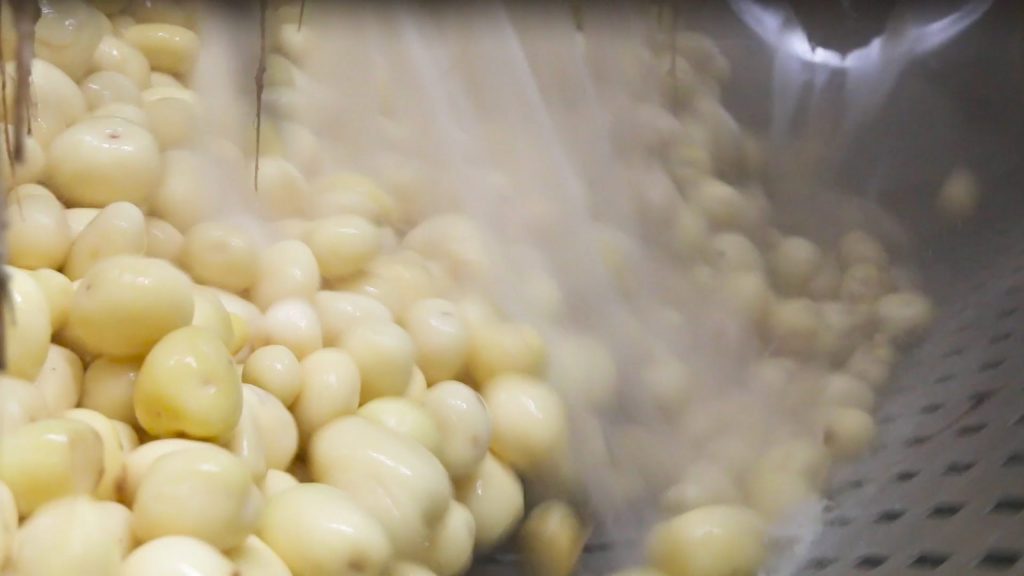
5. Validated Thermal Processing: Blanching, Cooling & Gelatinization
Following strict raw preparation and automated inspection, the potato slices immediately enter a highly regulated, multi-stage thermal processing loop. Unlike conventional boiling methods, our system utilizes precision engineering to modify the cellular and biochemical matrix of the potato, guaranteeing superior rehydration behavior and texture control for the final food ingredients.
Controlled Multi-Stage Thermal Execution:
- Enzyme Inactivation via Blanching: Slices are continuously monitored as they pass through a steam and hot water mixture under regulated temperature curves (65–83°C). This scientifically validated blanching stage completely deactivates naturally occurring enzymes (such as peroxidase and catalase), permanently eliminating the risk of enzymatic browning and discoloration during subsequent storage.
- Cell Wall Stabilization via Rapid Counter-Current Cooling: Immediately following blanching, the hot potato slices are subjected to an advanced counter-current cooling process, rapidly reducing the core product temperature to < 30°C. This thermal shock increases cell wall elasticity and retrogrades surface amylose, drastically reducing free starch leakage to prevent undesirable pasting or stickiness in the final mash.
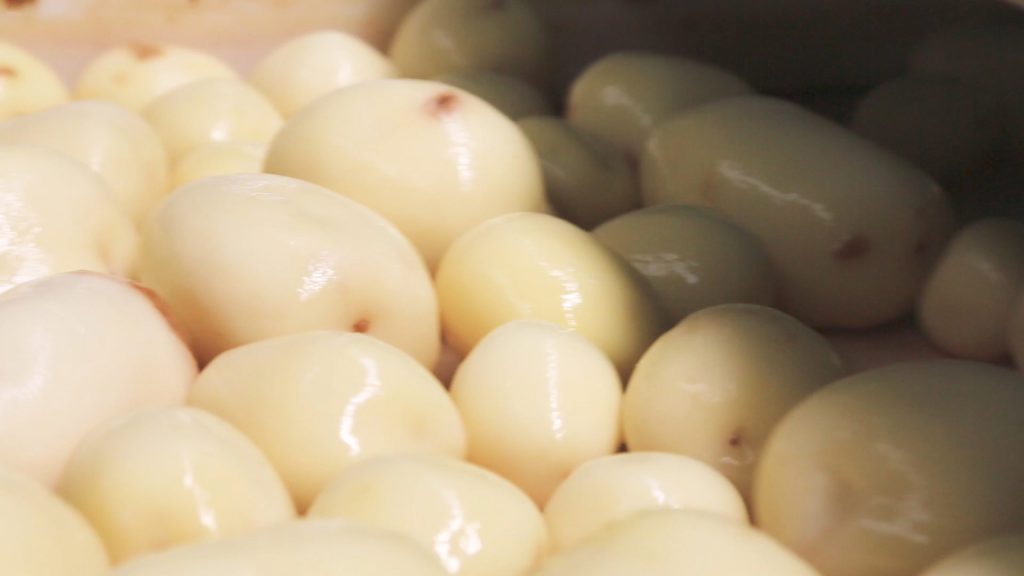
- Complete Starch Gelatinization via Steam Cooking: Stabilized slices then progress into an enclosed steam cooker operating at 0.3–0.4 MPa under a uniform temperature profile of 92–99°C. This stage achieves uniform, full-thickness starch gelatinization, ensuring that the final dehydrated potato flakes will expand rapidly and uniformly when reconstituted by the end consumer.
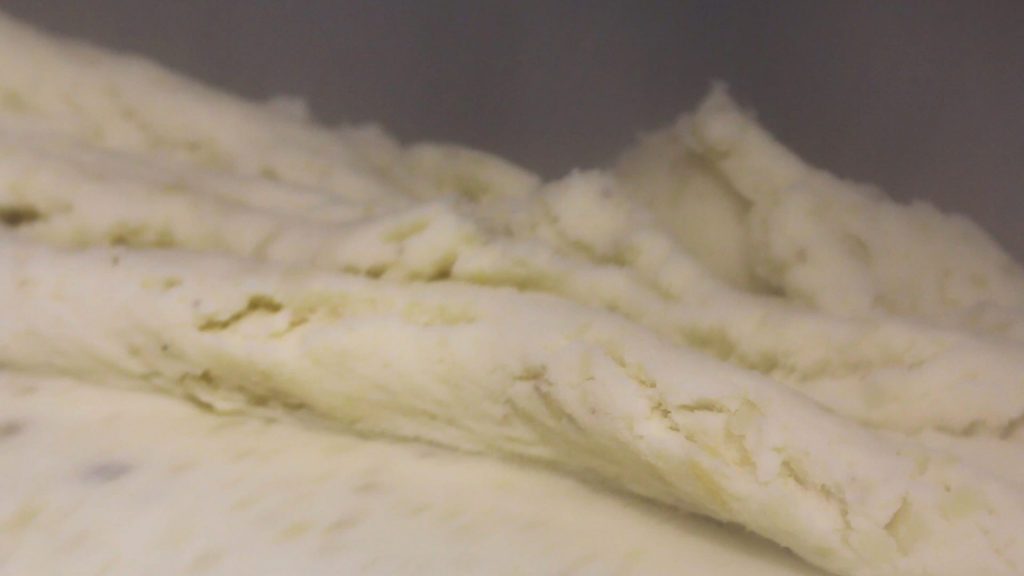
- Intact Cell Mashing: The fully cooked potatoes are gently transferred into a low-shear mashing system. Utilizing custom-engineered mesh screens running at strict PLC-controlled rotation speeds, the cooked tissue is separated smoothly into a homogeneous puree. The entire mechanical action is calculated to preserve individual cellular structures without tearing them, locking in authentic potato flavor and guaranteeing a smooth, premium mouthfeel.
To ensure continuous compliance and specification alignment, processing technicians monitor real-time temperature logs and steam pressure fluctuations at hourly intervals, logging every metric directly into the batch production history.
6. Drum Drying Technology (Core Dehydration Process)
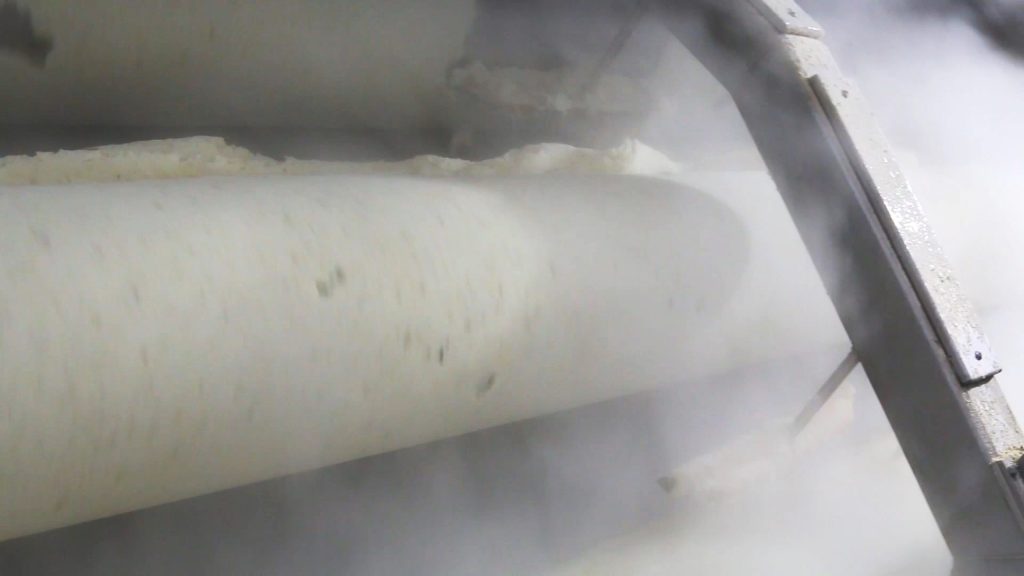
The mashed potato puree is applied onto precision-heated rotating drum dryers.
Under controlled temperature and pressure conditions, water is rapidly removed, forming thin dehydrated potato sheets.
Key technical advantages:
- Rapid moisture removal preserves structure
- Controlled film thickness ensures uniform drying
- Stable heat distribution prevents burning or discoloration
- Continuous industrial-scale production capability
The dried sheets are then carefully flaked into standardized potato flakes.
This stage defines the core functional properties of the final product, including texture, solubility, and shelf stability.
7. Milling Process (Potato Powder Production)
For applications requiring fine particle size, potato flakes undergo additional controlled milling.
Milling characteristics:
- Multi-stage grinding system
- Controlled particle size distribution
- Low-heat processing to preserve starch integrity
- Adjustable fineness based on application requirements
This enables production of:
- Instant mashed potato powder
- Industrial food ingredient blends
- Bakery and snack formulation materials
All milling parameters are customized according to customer specifications.

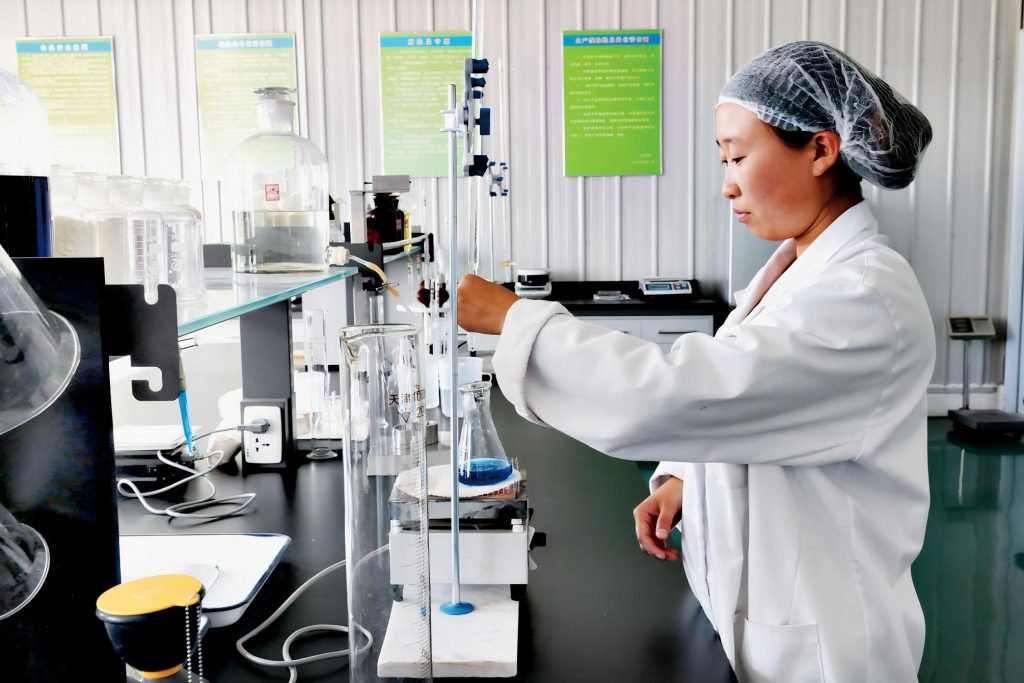
8. Multi-Layer Quality Control System
Every production batch is tested under a strict multi-point inspection system.
Quality inspection parameters include:
- Visual appearance and color uniformity
- Moisture content analysis
- Particle size distribution
- Rehydration performance testing
- Microbiological safety screening
- Packaging seal integrity
We follow internal QA protocols aligned with international food safety standards.
Only batches that pass all inspection layers are approved for release.
This ensures full compliance with B2B industrial expectations and export requirements.
9. Packaging, Traceability & Global Distribution
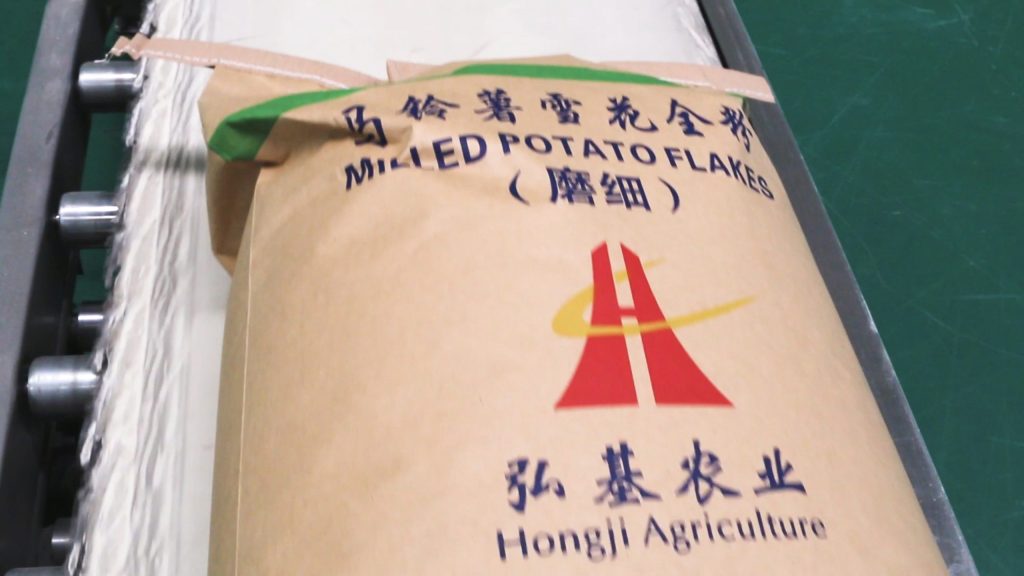
Finished products are packed using certified food-grade packaging systems designed for international logistics.
Packaging and logistics controls:
- Moisture-proof and oxygen-resistant materials
- Batch-coded traceability system
- Export-standard sealing and labeling
- Temperature-stable storage configuration
Each shipment maintains full traceability from:
seed → field → factory → final packaging
This provides our global customers with complete transparency and supply chain accountability.
Potato Flakes Manufacturing Process FAQ
Frequently Asked Questions (FAQ)
1. How are potato flakes manufactured?
Potato flakes are manufactured through a fully integrated production process that begins with seed breeding and ends with export-ready packaging. The complete manufacturing workflow includes potato variety selection, standardized cultivation, fresh potato storage, cleaning, peeling, blanching, steam cooking, gentle mashing, drum drying, quality inspection, and packaging. Each production stage is carefully controlled to ensure consistent product quality, food safety, and reliable industrial performance.
2. Why is potato variety important for potato flakes production?
Potato variety is one of the most important factors affecting the quality of dehydrated potato products. High-quality processing cultivars provide higher dry matter content, stable starch composition, better color retention, stronger disease resistance, improved processing efficiency, and superior rehydration performance after dehydration.
3. Why is dry matter content important?
Dry matter content directly influences production efficiency and finished product quality. Potatoes with higher dry matter require less water removal during dehydration, resulting in improved manufacturing yield, reduced energy consumption, better texture, and more stable product performance.
4. What happens during blanching?
Blanching is a controlled thermal treatment that deactivates naturally occurring enzymes responsible for discoloration and quality deterioration. This process stabilizes potato quality before steam cooking and helps maintain consistent color and flavor throughout the manufacturing process.
5. Why is rapid cooling performed after blanching?
Rapid cooling immediately follows blanching to stabilize potato cell structure and minimize starch leakage. This controlled cooling process improves texture consistency, reduces stickiness during processing, and prepares the potatoes for uniform steam cooking.
6. What is starch gelatinization?
Starch gelatinization occurs during steam cooking when potato starch granules absorb water and become fully gelatinized under controlled temperature and pressure. Proper gelatinization ensures excellent rehydration, smooth texture, and consistent functional performance in the finished potato flakes.
7. Why is drum drying used for potato flakes?
Drum drying is one of the most efficient industrial dehydration technologies for producing potato flakes. It rapidly removes moisture while preserving the natural characteristics of cooked potatoes, resulting in excellent rehydration, long shelf life, stable functionality, and consistent product quality.
8. How is potato powder produced?
Potato powder is produced by carefully milling finished potato flakes into controlled particle sizes. The milling process creates fine powder suitable for bakery products, soups, seasonings, dry mixes, snack coatings, and other industrial food applications requiring improved blending and dispersion.
9. How is product quality controlled during manufacturing?
Every production batch undergoes multiple quality inspections throughout the manufacturing process. Testing typically includes visual appearance, color consistency, moisture content, particle size distribution, rehydration performance, microbiological safety, and packaging integrity before products are approved for shipment.
10. How is food safety ensured?
Food safety is maintained through standardized agricultural management, controlled processing conditions, validated production procedures, comprehensive quality assurance programs, and full batch traceability throughout the entire manufacturing process.
11. What is batch traceability?
Batch traceability enables every production lot to be tracked throughout the entire supply chain—from seed breeding and agricultural cultivation to processing, quality inspection, packaging, and final shipment. This ensures complete transparency and accountability for every finished product.
12. Can potato flakes be customized?
Yes. HONGJI provides customized manufacturing solutions for industrial customers, including particle size adjustment, moisture control, functional property optimization, packaging customization, OEM manufacturing, and private label production according to customer specifications.
13. What industries use industrial potato flakes?
Industrial potato flakes are widely used in instant mashed potatoes, bakery products, snack foods, frozen foods, soups, sauces, meat processing, ready meals, seasoning blends, and industrial food ingredient manufacturing.
14. What is the difference between potato flakes and potato powder?
Potato flakes are produced directly after drum drying, while potato powder is manufactured by further milling potato flakes into finer particles. Both products originate from the same manufacturing process but are designed for different food processing applications and formulation requirements.
15. Why does HONGJI use an integrated seed-to-product supply chain?
HONGJI operates a vertically integrated seed-to-product supply chain to ensure consistent raw material quality, stable production performance, complete traceability, reduced seasonal variability, improved food safety, and reliable global supply for industrial food manufacturers.
16. What are the advantages of vertically integrated potato production?
A vertically integrated production system allows complete control over seed breeding, farming, storage, processing, quality assurance, and export logistics. This approach minimizes raw material variability, improves production consistency, strengthens traceability, and supports long-term supply reliability.
17. Why is quality inspection performed throughout the manufacturing process?
Continuous quality inspection ensures that every production stage meets predefined specifications before moving to the next step. Multi-layer quality control helps maintain consistent product performance, food safety, and compliance with international customer requirements.
18. How are potato flakes packaged for export?
Finished potato flakes are packed using food-grade, moisture-resistant packaging materials suitable for international transportation. Every package is batch coded to support complete traceability and global supply chain management.
19. What makes industrial potato flakes suitable for food manufacturing?
Industrial potato flakes provide excellent rehydration, stable viscosity, consistent particle characteristics, long shelf life, convenient transportation, and reliable processing performance, making them suitable for a wide range of commercial food manufacturing applications.
20. Why choose HONGJI Agriculture as a potato flakes manufacturer?
HONGJI Agriculture combines seed breeding, contract farming, controlled storage, modern drum drying technology, strict quality management, and international export capability within one integrated production system. This comprehensive approach enables the company to supply high-quality potato flakes and potato powder with consistent performance, flexible customization, and reliable global delivery.