Copos de patata para productos de panadería sin gluten y con etiqueta limpia
Gluten-free bread is the hardest product in commercial baking to get right. Remove gluten and you remove the one protein network that traps fermentation gas, holds water, and gives wheat bread its spring — so formulators fall back on rice flour, tapioca starch, and a gum (almost always xanthan) to patch the structure back together. The result is usually a loaf that is dense, dry on day one, and stale by day three.
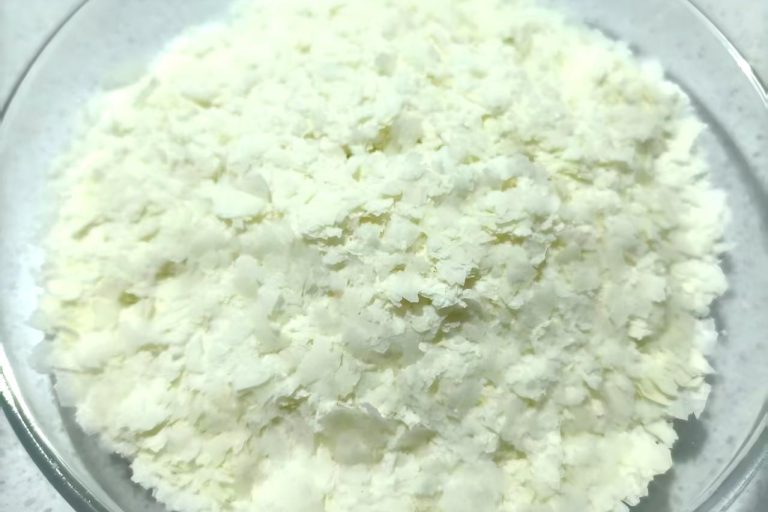
Potato flakes change that equation. Because they are pregelatinizado, they absorb water and form a gel without cooking, and because they carry native potato protein, they emulsify fat and stabilize bubbles the way a gum does — with a one-word ingredient declaration: “dried potato.”
This guide documents how Hongji Potato Flakes replace both xanthan gum and modified starch in gluten-free bread, using the validated 30% flour-replacement formulation — and it quantifies, from the trial data, exactly how much shelf life the substitution buys and where the substitution stops paying.
En pocas palabras
Gluten is the scaffolding of bread — the elastic cage that holds the gas bubbles yeast makes. Gluten-free flour has no scaffolding, so it collapses unless you add a gum to hold the bubbles. Potato flakes act like a self-setting filler: the moment warm water touches them they swell into a gel that props the bubbles open from the inside, and the potato protein seals the bubble walls. You get the structure of a gum and the water-holding of a starch in a single pantry ingredient that says “dried potato” on the label.
Puntos clave
- 30% is the sweet spot — replacing 30% of a rice flour + tapioca base with potato flakes raised specific volume 20.7% (2.80 → 3.38 mL/g) and cut day-1 firmness 38% (1,850 → 1,150 g).
- The optimum is real, not “more is better” — fitting the trial points puts the peak at ~28.7% substitution; 40% already regresses.
- It roughly quadruples usable shelf life — at a 2,000 g firmness threshold, the 30% loaf reaches it around day 5.7 versus day 1.4 for the control.
- It replaces the gum — potato protein and pre-gelatinized starch do the structural work of 0.5% xanthan without the E-number.
- Water is the mechanism — Type H flakes hold 7.3 g water per gram, which is what keeps the crumb soft and slows starch retrogradation.
Why Gluten-Free Bread Fails — and Where Potato Flakes Intervene
A typical gluten-free bread starts from rice flour (60%) and tapioca starch (40%) with xanthan gum (0.5%) as the sole structuring agent. That base has three specific weaknesses:
| Defect | Typical value | Consumer symptom |
|---|---|---|
| Low specific volume | 2.8 mL/g | Dense, “brick-like” loaf |
| High crumb firmness | 1,850 g (40% strain) | Hard, dry mouthfeel on day 1 |
| Poor elasticity | 0.72 springiness | Crumbles, no recovery after squeezing |
| Fast staling | 38% moisture loss / 5 days | Stale by day 3 |
Potato flakes address all three at once: their high water-holding capacity keeps crumb moisture in place, their starch granules (swelling at 62–68°C) build a stable gas-cell network during proofing, and their native protein stabilizes the bubbles a gum is otherwise added to hold.
The Validated Formulation
The replacement is made on a weight-for-weight basis against the dry flour/starch blend, keeping all other components fixed (water 90%, yeast 2%, sugar 4%, salt 1.5%, oil 6%, egg powder 3%, all baker’s %):
| Treatment | Rice flour | Tapioca starch | Copos de patata | Xanthan gum |
|---|---|---|---|---|
| Control | 60% | 40% | 0% | 0.5% |
| T1 | 48% | 32% | 20% | 0.5% |
| T2 | 42% | 28% | 30% | 0.5% |
| T3 | 36% | 24% | 40% | 0.5% |
Process is conventional: spiral-mix, bulk ferment 35°C / 85% RH for 45 min, scale 500 g, final proof to +80% height, bake 190°C top / 180°C bottom for 35 min.
What 30% Replacement Delivers
Results from the full application-development trial (500 g loaves, three replicates, TPA at 40% strain on a 75 mm plate):
| Parámetro | Control (0%) | T2 (30% flakes) | Change |
|---|---|---|---|
| Specific volume | 2.80 mL/g | 3.38 mL/g | +20.7% |
| Firmness (day 1) | 1,850 g | 1,150 g | −38% |
| Springiness | 0.72 | 0.81 | approaching wheat’s 0.85–0.90 |
| Cohesiveness | 0.48 | 0.61 | resists crumbling |
| Crumb moisture (day 1) | 38.2% | 43.8% | +5.6 pts |
| Moisture loss / 5 days | 38% | 22% | −16 pts |
| Overall acceptability (9-pt) | 5.6 | 7.6 | +36% |
The texture score moved from 4.8 to 8.0 — the largest single jump in the trial — because the softer, more resilient crumb is exactly what gluten-free consumers say they cannot find.
Where the Substitution Stops Paying: The 28.7% Optimum
The trial’s four points (0/20/30/40%) are not just a ranking — they define a curve. Fitting a parabola to the specific-volume data:
Specific volume = −0.00205·(substitution%)² + 0.1175·(substitution%) + 1.70
The vertex of that curve — the substitution level where specific volume peaks — is 28.7%. That is not a coincidence of rounding; it is the point where two opposing effects balance: potato protein’s emulsification is still strengthening the crumb, but the added starch is beginning to crowd out the gas cells.
| Step | Specific volume | Marginal change |
|---|---|---|
| 20% → 30% | 3.23 → 3.38 | +0.15 mL/g (still worth it) |
| 30% → 40% | 3.38 → 3.12 | −0.26 mL/g (regressing) |
The practical rule: target 25–35% and do not push past 30% without a trial. The 40% treatment loses volume y firmness (1,150 → 1,480 g) because excess potato flakes raise viscosity and interfere with gas-cell coalescence during proofing.
The Shelf-Life Arithmetic: ~4× Longer
The most commercially useful number in the trial is hidden in the firming kinetics. Converting the day-1 and day-5 firmness into daily firming rates:
| Formulation | Firming rate | Time to 2,000 g firmness |
|---|---|---|
| Control | 355 g/day | ~1.4 days |
| T2 (30%) | 180 g/day | ~5.7 days |
Using 2,000 g as a practical “noticeably stale” threshold, the 30% loaf stays below it about four times longer than the control. In retail terms, that is the difference between a product that must sell in 2–3 days and one with a 5–7 day sellable window — which changes a retailer’s ordering and markdown behavior, not just the consumer’s experience.
The mechanism is physical, not a coating trick. Pre-gelatinized potato starch holds 7.3 g of water per gram, and at 30% substitution that is ~219 g of theoretical water-binding per 100 g of dry base. The crumb only shows +5.6 percentage points of moisture because the system is equilibrium-limited — but that retained water keeps the starch chains plasticized and slows the retrogradation that causes staling.
The Clean-Label Angle
The same functional result — structure, softness, extended shelf life — normally requires three ingredients a clean-label buyer does not want on the pack:
| Conventional tool | Clean-label replacement |
|---|---|
| Xanthan gum (0.5%) | Native potato protein + pre-gelatinized starch |
| Modified starch | Native potato starch (already gelatinized) |
| DATEM / SSL emulsifiers | Potato protein emulsification |
At 30% inclusion the declaration simplifies to recognizable pantry ingredients: rice flour, tapioca starch, dried potato, water, yeast, sugar, salt, oil, egg. That is the difference between “gluten-free” and “clean-label gluten-free” — and it is the faster-growing shelf position.
Formulation Rules for the Formulator
Three adjustments matter when substituting potato flakes into a gluten-free (or any) dough: llenar de agua (0,8–1,21 TP3T por cada 11 TP3T en forma de escamas), menos grasa y menos azúcar (5–10% y 5–15%), y oven cooler and longer (drop 5–10°C, extend 5–10% bake time). Hongji supplies two grades: HJ-PF-01 (standard, the trial grade) and HJ-PF-02 (fine-milled, for smoother dispersion in high-speed mixers and dry mixes). Both are inherently gluten-free, and both carry full batch traceability — which matters when a finished loaf must meet a “certified gluten-free” (<20 ppm) claim.
Preguntas frecuentes
Are potato flakes actually gluten-free? Yes — potato contains no gluten, so the flakes are inherently gluten-free. The operative question is cross-contamination control in the finished plant, not the ingredient. Hongji documents allergen status and production-line controls for exactly this reason.
Can potato flakes fully replace xanthan gum? In most gluten-free bread systems, yes — the trial kept a 0.5% gum for consistency, but at 30% flakes the structuring and emulsifying work is being done by potato protein and pre-gelatinized starch. Many commercial formulations drop the gum entirely.
Why does 40% substitution perform worse than 30%? The fitted curve peaks at ~28.7%: beyond that, excess potato flakes raise viscosity and interfere with gas-cell coalescence during proofing, so the crumb regresses toward smaller, denser cells and loses volume. The optimum is a real peak, not a monotonic “more is better.”
How much shelf life does it actually add? Roughly fourfold at the 2,000 g firmness threshold — the 30% loaf stays below it to ~day 5.7 versus ~day 1.4 for the control. Firming rate drops from 355 to 180 g/day.
Does the potato flavor come through? At 30% it reads neutral-to-slightly-savory, not distinctly “potato.” Panelists scored flavor 7.3 at T2 versus 6.0 for the control — the flakes round out the rice/tapioca base rather than dominating it.
What grade should I use for a gluten-free bread mix? HJ-PF-01 for most systems; HJ-PF-02 (fine-milled) if you are blending into a dry mix that must disperse uniformly in a high-speed mixer without clumping.
Datos del autor y de la fábrica
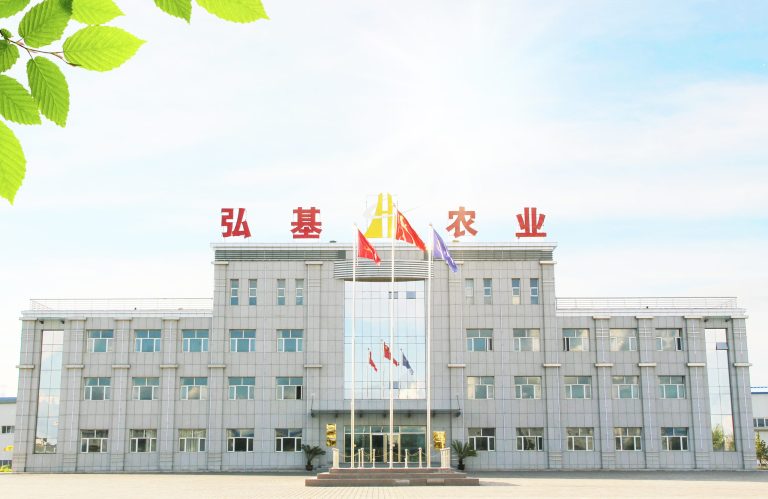
Escrito por el Equipo de Ingeniería de Aplicaciones y Procesos Agrícolas de Hongji — application and process engineers at the Hongji Agriculture processing facility, Zhangjiakou, Hebei Province, China — based on Application Development Record HJA-APP-2024-008-02 (gluten-free bread flour replacement). Reviewed by the Departamento de Calidad y Seguridad Alimentaria antes de su publicación.
Certificaciones de fábrica: ISO 22000 (gestión de la seguridad alimentaria) · FSSC 22000 (con certificación GFSI) · HACCP · Halal · Kosher · Ecológico (UE/USDA).
The full trial dataset — TPA texture, C-Cell crumb structure, 5-day staling kinetics, and 9-point sensory scores — is published on the Centro de conocimientos técnicos.
Artículos relacionados
- Copos de patata en la alimentación humana: la matriz completa de aplicaciones
- Puré de patatas instantáneo para el sector de la restauración y de productos de gran consumo
- Copos de patata Hongji — Producto
- Customized Potato Flakes & Powder
- Guía de aplicación para panadería (técnica)
Fuentes y verificación
All trial data — specific volume, TPA firmness/springiness/cohesiveness, crumb moisture, 5-day staling kinetics, C-Cell structure, and 9-point sensory scores — are from Hongji Agriculture Application Development Record HJA-APP-2024-008-02, reproduced in full at docs.hjpotatoflakes.com. The derived figures — the 28.7% optimum (parabolic fit), the 4× shelf-life ratio, and the firming rates — are the author’s calculations from those published data, shown with their method. Flake specifications (moisture ≤6.0%, WHC 7.3 g/g) are from the factory datasheet; confirm against your order’s Certificate of Analysis.
Autor: Equipo de Ingeniería de Procesos y Aplicaciones Agrícolas de Hongji · Revisado por: Departamento de Calidad y Seguridad Alimentaria · Última actualización: 29 de agosto de 2026