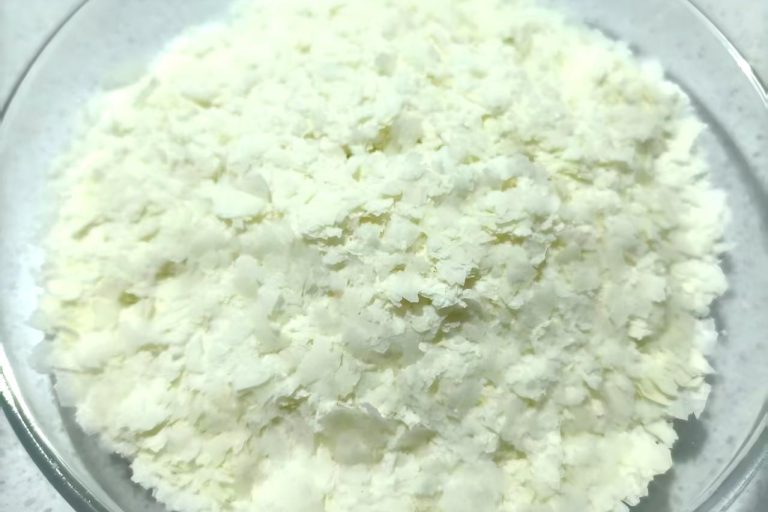
Puré de patatas instantáneo para el sector de la restauración y de productos de gran consumo
Instant mashed potato is the largest single-volume application for dehydrated potato flakes worldwide — and the one application where the flake is the finished product rather than an ingredient. A foodservice operator reconstituting a 10 kg bag for a hotel buffet and a CPG brand packing a 50 g retail sachet are buying the same base material: pre-gelatinized potato flakes. What separates a good product from a pasty, grey, or gluey one is almost never the flake itself — it is the reconstitution ratio, the water temperature, and the mixing method.
This guide covers the three markets that buy Hongji Potato Flakes for instant mash — foodservice bulk, retail/CPG, y industrial further-processing — and adds the arithmetic that drives the purchase: how much finished mash a kilogram of flakes actually yields, and where the cost of a retail pack really lives.
En pocas palabras
Instant mash is a dry sponge with a fixed recipe for re-wetting. The “reconstitution ratio” is just how many parts of water you add to one part of flakes — 1:4.5 means one scoop of flakes plus four-and-a-half scoops of hot water. Change the ratio and you change the texture: more water makes it soft and pipeable, less water makes it stiff enough to shape into a croquette or gnocchi. The flake stays the same; the water does the tuning.
Puntos clave
- The ratio sets the texture — foodservice runs 1:4.5–5.0, retail 1:3.8–4.2, gnocchi 1:2.5–3.0. One flake, a 2.4× range of finished textures.
- A kilogram of flakes is ~5–6 kg of finished mash — foodservice yields 5.5–6.0×, retail 4.8–5.2×. That multiplier is the real unit economics of instant mash.
- The flake is 65–85% of a retail pack — so the flake spec, not the minor ingredients, is where the product quality and the margin both live.
- Temperature is critical — 80–85°C water hydrates fully in 15–30 seconds; boiling water damages the starch and causes a pasty texture.
- Color spec drives premium — L* ≥ 90 and reducing sugars ≤1.0% separate a bright-white premium mash from an ordinary one (grey-blue tint is the classic defect).
Choosing the Right Flake Specification
The instant-mash quality ladder is set by three parameters — variety, color, and reducing sugars — and the product codes map onto them directly:
| Atributo | Minimum | Premium product |
|---|---|---|
| Variety | Atlantic / Shepody / Russet Burbank | Shepody (best mouthfeel) |
| Humedad | ≤6.0% | ≤5.5% |
| L* color | ≥88 | ≥90 |
| Azúcares reductores | ≤1,51 TP3T | ≤1.0% |
| Water absorption index | 5.5–7.5 g/g | 6.0–7.5 g/g |
For retail and export, Hongji recommends HJ-PF-01 (Premium) — L* ≥ 90 and ≤1.0% reducing sugars — because that spec keeps a mash bright white through its shelf life and avoids the grey-blue tint that discolors an under-spec flake.
The Reconstitution Ratios
The single most useful table in instant-mash formulation — the flakes-to-water ratio by application:
| Solicitud | Copos: agua | Temperatura del agua | Coherencia |
|---|---|---|---|
| Puré a granel para el sector de la restauración | 1 : 4.5–5.0 | 80–85 °C | Soft, pipeable |
| Tienda / hogar (estándar) | 1 : 3.8–4.2 | 75–85 °C | Medium, scoopable |
| Shepherds pie topping | 1 : 3.5–4.0 | 80–85 °C | Holds shape |
| Croquetas de patata / bolitas | 1 : 2.8–3.2 | 85–90 °C | Very firm, moldable |
| Masa para ñoquis | 1 : 2.5–3.0 | 85–90 °C | Stiff, dough-like |
| Soup / sauce thickener | 1 : 5.0–6.0 | 90–95°C | Thin, pourable |
The Yield Arithmetic: One Kilo Becomes Five
Convert those ratios to finished yield and the economics of instant mash become explicit:
| Solicitud | Ratio | Finished yield per 1 kg flakes |
|---|---|---|
| Foodservice bulk | 1 : 4.5–5.0 | 5.5–6.0 kg |
| Retail / home | 1 : 3.8–4.2 | 4.8–5.2 kg |
| Croquettes | 1 : 2.8–3.2 | 3.8–4.2 kg |
| Masa para ñoquis | 1 : 2.5–3.0 | 3.5–4.0 kg |
The same multiplier shows up in the pack sizes that actually ship:
| Pack | Flake weight | Reconstituted yield |
|---|---|---|
| Individual sachet | 50 g | 240–260 g (≈5×) |
| Family box | 200 g | 960–1,040 g (≈5×) |
| Family box (large) | 500 g | 2.4–2.6 kg (≈5×) |
| Foodservice | 2.0 kg | ~10 kg |
The practical takeaway: instant mash is a 5× water-play. The flake is the concentrated value; the water is added at the point of use. That is why the flake’s spec — not its price per kilogram alone — dominates the finished-product economics: a small difference in rehydration ratio or color shifts the yield and the appearance of every portion.
Where the Cost of a Retail Pack Lives
A retail instant-mash pack is a short formula, and the flake dominates it:
| Ingrediente | Proportion | Función |
|---|---|---|
| Potato Flakes (Premium HJ-PF-01) | 65–85% | Base ingredient |
| Non-fat milk solids | 3–8% | Creaminess, flavor |
| Salt | 1.5–2.5% | Flavor |
| Powdered vegetable fat | 2–5% | Mouthfeel |
| Disodium diphosphate | 0.3–0.5% | Color stabilizer (prevents grey tint) |
| Mono/diglyceride | 0.2–0.5% | Dispersion aid |
| Silicon dioxide | 0–0.5% | Anti-caking |
Because the flake is 65–85% of the dry weight, the flake specification is the product quality and the unit cost simultaneously. A buyer who negotiates only on flake price while ignoring L*, moisture, and reducing sugars is optimizing the smallest lever and leaving the biggest one — spec stability — unmanaged. The two quiet quality determinants are disodium diphosphate (color retention) and silicon dioxide (flow through high-speed fillers); a cheap flake with high reducing sugars cannot be rescued by either.
Foodservice: Bulk Preparation Done Right
The foodservice failure modes are almost always process errors, not ingredient errors. The correct sequence for a 10 kg batch:
- Heat water to 80–85°C — do not boil. Boiling water damages the starch and produces a pasty texture. A 50/50 water/milk mix gives the best flavor.
- Add fat first — 50–80 g butter or margarine per 1 kg flakes, melted into the hot water before the flakes go in.
- Add flakes in a continuous feed over 15–20 seconds while mixing.
- Mix gently and briefly — planetary mixer with paddle (not wire whip), 30–60 RPM, 45–90 seconds. Over-mixing ruptures cells and turns the mash gluey.
- Rest 2–4 minutes for moisture equilibration.
- Hold at 65–80°C for up to 1 hour, covered, stirring every 15 minutes. Never hold below 60°C — that is the microbial growth zone.
Hydration itself is fast — pre-gelatinized starch granules absorb water and swell in 15–30 seconds — so the entire batch is service-ready in under five minutes. That speed, not the ingredient cost, is why foodservice operators standardize on flakes over fresh potato.
Retail / CPG Formulation
For a cold-water “just add tap water” premium line, the base shifts to fine-milled HJ-PF-02 (60%) plus instant milk powder, a cold-soluble modified starch, and spray-dried fat — a formulation built for consumers who will never heat water to 80°C. The standard hot-water retail pack keeps HJ-PF-01 Premium at 65–85% as the base.
Industrial Further-Processing
Beyond the standalone mash, reconstituted flakes are the base for a family of further-processed products where the ratio is set by the final shaping requirement:
| Producto | Copos: agua | Key formula notes |
|---|---|---|
| Shepherds / cottage pie topping | 1 : 3.8 | 80% mash + butter, egg yolk, parmesan; bake 190°C 25–30 min |
| Potato croquettes | 1 : 3.0 | 72% firm mash + egg, flour, cheese; chill, bread, fry 175°C 3–4 min |
| Gnocchi | 1 : 2.8 | 60% very-firm mash + type 00 flour, egg; boil until floating |
The pattern to internalize: the firmer the final product needs to hold its shape, the lower the water ratio. A soup thickener runs 1:5.0–6.0; a gnocchi dough runs 1:2.5–3.0. Same flake, opposite ends of the ratio scale — and that 2.4× span is what makes one ingredient serve a whole prepared-meals range.
Why Buyers Standardize on Hongji
Instant mash is a commodity-spec product, which means the differentiation is not the flake chemistry but the consistency of the spec across seasons and lots. Hongji’s vertical integration — the same company manages the seed, the field, the storage, and the drum dryer — is what keeps L*, moisture, and reducing sugars inside a tight band batch after batch. For a CPG brand, that is the difference between a stable retail formula and a running reformulation problem. Grade detail is in the product grade comparison matrix, and custom particle size or reduced reducing sugars are available through desarrollo de ingredientes a medida.
Preguntas frecuentes
Why does boiling water ruin instant mash? Pre-gelatinized starch rehydrates best at 80–85°C. Boiling water (100°C) over-hydrates and ruptures the granules, releasing free starch and producing the pasty, gluey texture. Heat to 80–85°C, never to a rolling boil.
What ratio should I use for a hotel buffet? 1:4.5–5.0 gives a soft, pipeable mash that holds well in a steam table, yielding 5.5–6.0 kg per kilogram of flakes. Add fat at 50–80 g per kg flakes before the flakes for the best mouthfeel.
How much finished mash does one kilogram of flakes make? Roughly 5.5–6.0 kg in foodservice (1:4.5–5.0) and 4.8–5.2 kg in retail (1:3.8–4.2). Instant mash is fundamentally a ~5× water-play.
How do I keep retail mash from turning grey? Use a premium flake (L* ≥ 90, reducing sugars ≤1.0%) and add disodium diphosphate at 0.3–0.5%. The grey-blue tint is a reducing-sugar reaction, so the spec of the flake is the first line of defense.
What is the shelf life of the dry flake? With moisture ≤6.0% and proper packaging, the dry flakes store 12–18 months in cool, dry conditions. The reconstituted mash, in contrast, holds for 1 hour at 65–80°C and must not sit below 60°C.
Which flake grade is right for a cold-water retail mix? Fine-milled HJ-PF-02, at ~60% of the blend, because it disperses and hydrates in tap-temperature water — the standard hot-water pack can use HJ-PF-01 Premium.
Datos del autor y de la fábrica
Escrito por el Equipo de Ingeniería de Aplicaciones y Procesos Agrícolas de Hongji — application and process engineers at the Hongji Agriculture processing facility, Zhangjiakou, Hebei Province, China — based on factory application guides and production data. Reviewed by the Departamento de Calidad y Seguridad Alimentaria antes de su publicación.
Certificaciones de fábrica: ISO 22000 (gestión de la seguridad alimentaria) · FSSC 22000 (con certificación GFSI) · HACCP · Halal · Kosher · Ecológico (UE/USDA).
Las guías completas de aplicación, las fichas técnicas y el certificado de análisis (CoA) se publican en la página web de Centro de conocimientos técnicos y se envía con cada pedido.
Artículos relacionados
- Copos de patata en la alimentación humana: la matriz completa de aplicaciones
- Copos de patata para productos de panadería sin gluten y con etiqueta limpia
- Copos de patata Hongji — Producto
- Product Application Overview
- Instant Mashed Potato Application Guide (Technical)
- Potato Flakes Technical Datasheet
Fuentes y verificación
Reconstitution ratios, water temperatures, foodservice procedure, retail formulation, and further-processed product formulas are from Hongji Agriculture’s published application guides and datasheets at docs.hjpotatoflakes.com. The derived yield multipliers (4.8–6.0×) are the author’s calculations from the published ratios, shown with their method. Flake specifications (moisture ≤6.0%, L* ≥88/≥90, reducing sugars ≤1.5%/≤1.0%) are from the factory datasheet; confirm against your order’s Certificate of Analysis.
Autor: Equipo de Ingeniería de Procesos y Aplicaciones Agrícolas de Hongji · Revisado por: Departamento de Calidad y Seguridad Alimentaria · Última actualización: 29 de agosto de 2026