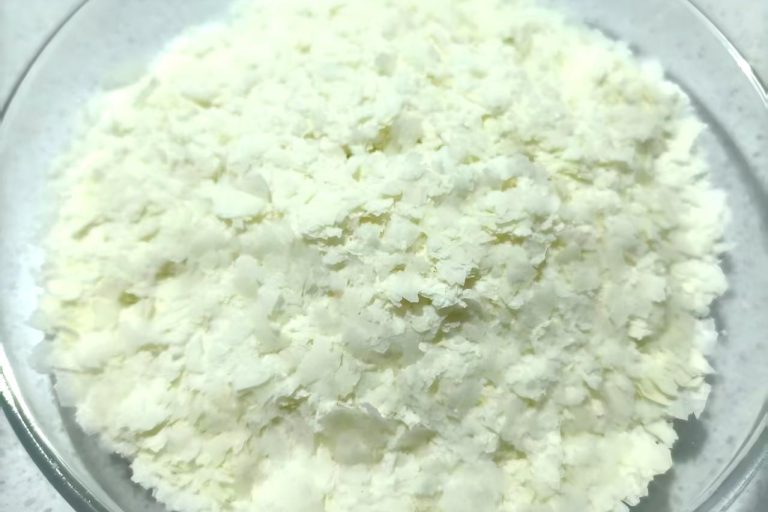
外食産業および消費財(CPG)向けインスタントマッシュポテト
Instant mashed potato is the largest single-volume application for dehydrated potato flakes worldwide — and the one application where the flake is the finished product rather than an ingredient. A foodservice operator reconstituting a 10 kg bag for a hotel buffet and a CPG brand packing a 50 g retail sachet are buying the same base material: pre-gelatinized potato flakes. What separates a good product from a pasty, grey, or gluey one is almost never the flake itself — it is the reconstitution ratio, the water temperature, and the mixing method.
This guide covers the three markets that buy Hongji Potato Flakes for instant mash — foodservice bulk, retail/CPG, 、および industrial further-processing — and adds the arithmetic that drives the purchase: how much finished mash a kilogram of flakes actually yields, and where the cost of a retail pack really lives.
わかりやすく言うと
Instant mash is a dry sponge with a fixed recipe for re-wetting. The “reconstitution ratio” is just how many parts of water you add to one part of flakes — 1:4.5 means one scoop of flakes plus four-and-a-half scoops of hot water. Change the ratio and you change the texture: more water makes it soft and pipeable, less water makes it stiff enough to shape into a croquette or gnocchi. The flake stays the same; the water does the tuning.
主なポイント
- The ratio sets the texture — foodservice runs 1:4.5–5.0, retail 1:3.8–4.2, gnocchi 1:2.5–3.0. One flake, a 2.4× range of finished textures.
- A kilogram of flakes is ~5–6 kg of finished mash — foodservice yields 5.5–6.0×, retail 4.8–5.2×. That multiplier is the real unit economics of instant mash.
- The flake is 65–85% of a retail pack — so the flake spec, not the minor ingredients, is where the product quality and the margin both live.
- Temperature is critical — 80–85°C water hydrates fully in 15–30 seconds; boiling water damages the starch and causes a pasty texture.
- Color spec drives premium — L* ≥ 90 and reducing sugars ≤1.0% separate a bright-white premium mash from an ordinary one (grey-blue tint is the classic defect).
Choosing the Right Flake Specification
The instant-mash quality ladder is set by three parameters — variety, color, and reducing sugars — and the product codes map onto them directly:
| 属性 | Minimum | Premium product |
|---|---|---|
| Variety | アトランティック/シェポディ/ラセット・バーバンク | Shepody (best mouthfeel) |
| 水分 | ≤6.0% | ≤5.5% |
| L* color | ≥88 | ≥90 |
| 還元糖 | ≤1.51 TP3T | ≤1.0% |
| Water absorption index | 5.5–7.5 g/g | 6.0–7.5 g/g |
For retail and export, Hongji recommends HJ-PF-01 (Premium) — L* ≥ 90 and ≤1.0% reducing sugars — because that spec keeps a mash bright white through its shelf life and avoids the grey-blue tint that discolors an under-spec flake.
The Reconstitution Ratios
The single most useful table in instant-mash formulation — the flakes-to-water ratio by application:
| 用途 | フレーク:水 | 水温 | 一貫性 |
|---|---|---|---|
| 外食産業向けバルクマッシュ | 1 : 4.5–5.0 | 80~85°C | Soft, pipeable |
| 小売/家庭用(標準) | 1 : 3.8–4.2 | 75~85°C | Medium, scoopable |
| Shepherds pie topping | 1 : 3.5–4.0 | 80~85°C | Holds shape |
| ポテトコロッケ/ポテトボール | 1 : 2.8–3.2 | 85~90°C | Very firm, moldable |
| ニョッキの生地 | 1 : 2.5–3.0 | 85~90°C | Stiff, dough-like |
| Soup / sauce thickener | 1 : 5.0–6.0 | 90–95°C | Thin, pourable |
The Yield Arithmetic: One Kilo Becomes Five
Convert those ratios to finished yield and the economics of instant mash become explicit:
| 用途 | Ratio | Finished yield per 1 kg flakes |
|---|---|---|
| Foodservice bulk | 1 : 4.5–5.0 | 5.5–6.0 kg |
| Retail / home | 1 : 3.8–4.2 | 4.8–5.2 kg |
| Croquettes | 1 : 2.8–3.2 | 3.8–4.2 kg |
| ニョッキの生地 | 1 : 2.5–3.0 | 3.5–4.0 kg |
The same multiplier shows up in the pack sizes that actually ship:
| Pack | Flake weight | Reconstituted yield |
|---|---|---|
| Individual sachet | 50 g | 240–260 g (≈5×) |
| Family box | 200 g | 960–1,040 g (≈5×) |
| Family box (large) | 500 g | 2.4–2.6 kg (≈5×) |
| Foodservice | 2.0 kg | ~10 kg |
The practical takeaway: instant mash is a 5× water-play. The flake is the concentrated value; the water is added at the point of use. That is why the flake’s spec — not its price per kilogram alone — dominates the finished-product economics: a small difference in rehydration ratio or color shifts the yield and the appearance of every portion.
Where the Cost of a Retail Pack Lives
A retail instant-mash pack is a short formula, and the flake dominates it:
| 原材料 | Proportion | 機能 |
|---|---|---|
| Potato Flakes (Premium HJ-PF-01) | 65–85% | Base ingredient |
| Non-fat milk solids | 3–8% | Creaminess, flavor |
| Salt | 1.5–2.5% | Flavor |
| Powdered vegetable fat | 2–5% | Mouthfeel |
| Disodium diphosphate | 0.3–0.5% | Color stabilizer (prevents grey tint) |
| Mono/diglyceride | 0.2–0.5% | Dispersion aid |
| Silicon dioxide | 0–0.5% | Anti-caking |
Because the flake is 65–85% of the dry weight, the flake specification is the product quality and the unit cost simultaneously. A buyer who negotiates only on flake price while ignoring L*, moisture, and reducing sugars is optimizing the smallest lever and leaving the biggest one — spec stability — unmanaged. The two quiet quality determinants are disodium diphosphate (color retention) and silicon dioxide (flow through high-speed fillers); a cheap flake with high reducing sugars cannot be rescued by either.
Foodservice: Bulk Preparation Done Right
The foodservice failure modes are almost always process errors, not ingredient errors. The correct sequence for a 10 kg batch:
- Heat water to 80–85°C — do not boil. Boiling water damages the starch and produces a pasty texture. A 50/50 water/milk mix gives the best flavor.
- Add fat first — 50–80 g butter or margarine per 1 kg flakes, melted into the hot water before the flakes go in.
- Add flakes in a continuous feed over 15–20 seconds while mixing.
- Mix gently and briefly — planetary mixer with paddle (not wire whip), 30–60 RPM, 45–90 seconds. Over-mixing ruptures cells and turns the mash gluey.
- Rest 2–4 minutes for moisture equilibration.
- Hold at 65–80°C for up to 1 hour, covered, stirring every 15 minutes. Never hold below 60°C — that is the microbial growth zone.
Hydration itself is fast — pre-gelatinized starch granules absorb water and swell in 15–30 seconds — so the entire batch is service-ready in under five minutes. That speed, not the ingredient cost, is why foodservice operators standardize on flakes over fresh potato.
Retail / CPG Formulation
For a cold-water “just add tap water” premium line, the base shifts to fine-milled HJ-PF-02 (60%) plus instant milk powder, a cold-soluble modified starch, and spray-dried fat — a formulation built for consumers who will never heat water to 80°C. The standard hot-water retail pack keeps HJ-PF-01 Premium at 65–85% as the base.
Industrial Further-Processing
Beyond the standalone mash, reconstituted flakes are the base for a family of further-processed products where the ratio is set by the final shaping requirement:
| 製品 | フレーク:水 | Key formula notes |
|---|---|---|
| Shepherds / cottage pie topping | 1 : 3.8 | 80% mash + butter, egg yolk, parmesan; bake 190°C 25–30 min |
| Potato croquettes | 1 : 3.0 | 72% firm mash + egg, flour, cheese; chill, bread, fry 175°C 3–4 min |
| Gnocchi | 1 : 2.8 | 60% very-firm mash + type 00 flour, egg; boil until floating |
The pattern to internalize: the firmer the final product needs to hold its shape, the lower the water ratio. A soup thickener runs 1:5.0–6.0; a gnocchi dough runs 1:2.5–3.0. Same flake, opposite ends of the ratio scale — and that 2.4× span is what makes one ingredient serve a whole prepared-meals range.
Why Buyers Standardize on Hongji
Instant mash is a commodity-spec product, which means the differentiation is not the flake chemistry but the consistency of the spec across seasons and lots. Hongji’s vertical integration — the same company manages the seed, the field, the storage, and the drum dryer — is what keeps L*, moisture, and reducing sugars inside a tight band batch after batch. For a CPG brand, that is the difference between a stable retail formula and a running reformulation problem. Grade detail is in the product grade comparison matrix, and custom particle size or reduced reducing sugars are available through オーダーメイドの原料開発.
よくある質問
Why does boiling water ruin instant mash? Pre-gelatinized starch rehydrates best at 80–85°C. Boiling water (100°C) over-hydrates and ruptures the granules, releasing free starch and producing the pasty, gluey texture. Heat to 80–85°C, never to a rolling boil.
What ratio should I use for a hotel buffet? 1:4.5–5.0 gives a soft, pipeable mash that holds well in a steam table, yielding 5.5–6.0 kg per kilogram of flakes. Add fat at 50–80 g per kg flakes before the flakes for the best mouthfeel.
How much finished mash does one kilogram of flakes make? Roughly 5.5–6.0 kg in foodservice (1:4.5–5.0) and 4.8–5.2 kg in retail (1:3.8–4.2). Instant mash is fundamentally a ~5× water-play.
How do I keep retail mash from turning grey? Use a premium flake (L* ≥ 90, reducing sugars ≤1.0%) and add disodium diphosphate at 0.3–0.5%. The grey-blue tint is a reducing-sugar reaction, so the spec of the flake is the first line of defense.
What is the shelf life of the dry flake? With moisture ≤6.0% and proper packaging, the dry flakes store 12–18 months in cool, dry conditions. The reconstituted mash, in contrast, holds for 1 hour at 65–80°C and must not sit below 60°C.
Which flake grade is right for a cold-water retail mix? Fine-milled HJ-PF-02, at ~60% of the blend, because it disperses and hydrates in tap-temperature water — the standard hot-water pack can use HJ-PF-01 Premium.
著者および工場の認証情報
執筆: Hongji農業応用・プロセスエンジニアリングチーム — application and process engineers at the Hongji Agriculture processing facility, Zhangjiakou, Hebei Province, China — based on factory application guides and production data. Reviewed by the 品質・食品安全部 出版前に。.
工場の認証: ISO 22000(食品安全マネジメント) · FSSC 22000(GFSI基準に準拠) · HACCP · ハラール · コーシャ · オーガニック(EU/USDA)。.
完全なアプリケーションガイド、データシート、および分析証明書(CoA)は、以下のサイトに掲載されています。 技術ナレッジセンター すべての注文に同梱して発送します。.
関連記事
- 食品用ポテトフレーク:用途一覧表(完全版)
- グルテンフリー・クリーンラベルのベーカリー向けポテトフレーク
- ホンジ・ポテトフレーク — 商品
- Product Application Overview
- Instant Mashed Potato Application Guide (Technical)
- Potato Flakes Technical Datasheet
出典と検証
Reconstitution ratios, water temperatures, foodservice procedure, retail formulation, and further-processed product formulas are from Hongji Agriculture’s published application guides and datasheets at docs.hjpotatoflakes.com. The derived yield multipliers (4.8–6.0×) are the author’s calculations from the published ratios, shown with their method. Flake specifications (moisture ≤6.0%, L* ≥88/≥90, reducing sugars ≤1.5%/≤1.0%) are from the factory datasheet; confirm against your order’s Certificate of Analysis.
作成者:紅基農業応用・プロセスエンジニアリングチーム · 監修:品質・食品安全部 · 最終更新日:2026年8月29日